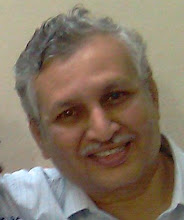
In the sudden demise of Dr CK Prahalad in San Diego, USA, the world of strategy has lost one of the most perceptive, innovative and influential strategic thinkers of all times. Strategy would not have been what it is today but for the innumerable path-breaking conceptual and analytical constructs that Professor Prahalad developed and propagated over the years. With indefatigable energy and passion he taught, wrote, consulted and mentored, on a global platform for over 44 years, leaving behind his unique and distinguished stamp on management thought and practice.
CK Prahalad (CK or CKP as he is popularly called) represented the very best of Indian intellect that found a global home. Born into a large family of Sanskrit Brahmin scholars in the South Indian city of Coimbatore in August 1941, Coimbatore Krishnarao Prahalad obtained his B Sc degree in Physics from Loyola College, University of Madras in 1960. After graduation, he worked in Union Carbide as industrial engineer and later in India Pistons as training manager. Setting sights on management education, he earned his PG diploma in Business Administration from the prestigious Indian Institute of Management, Ahmedabad, as a student of the first batch in 1966. His stint at Union Carbide and the move into the management studies were perhaps the critical inflexion points of his life.
Prahalad, armed with the MBA from IIMA, proceeded to Harvard Business School, USA where he earned his Doctor of Business Administration in 1975. He returned to India to teach at his Alma Mater, IIMA during 1976-77. He thereafter joined University of Michigan, USA and made his mark as a foremost management teacher in the United States. He served as the Distinguished University Professor of Corporate Strategy at the Stephen M Ross School of Business in the University of Michigan. Dr Prahalad was the recipient of several honors and awards globally. Honorary doctorate degrees from global universities and high-ranking civilian awards from the Government of India such as Padma Bhushan were part of the recognitions.
Though a bit dated, one of the best accounts of CK Prahalad’s passions expressed as his reflections can be found in the paper “C.K. Prahalad’s Passions: Reflections on His Scholorly Journey as a Researcher, Teacher and Management Guru” co-authored by Lynn Perry Wooten and Anne Parmigiani from University of Michigan and Nandini Lahiri from Indian School of Business (Journal of Management Inquiry, Vol. 14, No. 2, June 2005, pp 168-175).
This blog post presents Dr Prahalad’s genius from diverse perspectives based on the author’s understanding of his works and the author’s attendance in Dr Prahalad’s speaking forums.
Sweeping in canvas
Throughout his long distinguished career Professor Prahalad helped reshape strategy and set new directions for business. He had an unparalleled genius for developing seemingly abstract yet elegantly simple constructs, marked by lateral and out-of-the-box thinking. His teachings helped future managers and leaders acquire leading-edge conceptual, analytical and strategic skills. His articles and books, which went on to become bestsellers, shaped innumerable professionals, across domains and countries, to think differently. His consultancy assignments helped companies plan and grow existing and new businesses or turnaround the ailing ones. His speeches and presentations in several global forums helped strategy acquire a distinctiverecognition as a critical domain. More importantly, his mentoring of corporate boards, chief executive officers, entrepreneurs, bureaucrats and ministers helped India, Inc recognize its global potential.
If there is one factor that characterized all of CK’s contributions it is the unique trail-blazing nature. While several management gurus are content to spin extension and analogue theories around their first fundamental premise, CK constantly and consistently propounded new trail-blazing concepts and theories. As a result, CK made a more complete and holistic contribution to business management than any other exponent, save perhaps the legendary Peter Drucker. Each of Dr Prahalad’s bestselling books and award-winning articles exemplifies a thought process that is refreshingly different and genuinely creative.
Prahalad’s books institutionalized new ways of strategic thinking through elaborate paradigms, well-illustrated with real time case studies. His notable works include “Competing for the Future”, co-authored with Gary Hamel (1984), “Multinational Mission: Balancing Local Demands and Global Vision” (1987), ”The Future of Competition: Co-Creating Unique Value with Customers”, co-authored with Venkat Ramaswamy (2004), “The Fortune at the Bottom of the Pyramid: Eradicating Poverty through Profits” (2004), and “The New Age of Innovation: Driving Co-Created Value through Global Networks” (2008), co-authored with MS Krishnan. Each of the books created a new strategy paradigm completely different from the previous ones and laid new trails of strategic thinking.
Prahalad’s award-winning articles almost inevitably churned management thought and laid new pivots of strategic thinking. Prahalad’s “The Dominant Logic: A New Linkage between Diversity and Performance” (1986), co-authored with Richard Bettis,” Strategic Intent” (1989) and ”The Core Competence of Corporation” (1990), both co-authored with Gary Hamel,” The Role of Core Competencies in the Corporation” (1993), “A Strategy for Growth: The Role of Core Competence in the Corporation” (1993),” Weak Signals Vs. Strong Paradigms” (1995), “The End of Corporate Imperialism” (1998), “Serving the World’ Poor, Profitably” (2002), co-authored with Allan Hammond, “The New Frontier of Experience Innovation” (2003), and “Twenty Hubs and No HQ” (2008), co-authored with Hrishikesh Bhattacharyya, have each led to entirely new waves of thinking in corporate strategy.
Unlike many management gurus who preferred to plough their own lonely paths, Professor Prahalad believed strongly in collaborating with other management thinkers, including his students who evolved into independent thinkers in their own right. The array of books and articles he co-authored with such experts, some of them listed above, is proof of his cross-institutional, cross-border collaborative research and writing, often taking years of dedicated work before a publication is made. Quite often, however, it fell on his shoulders to present and communicate thoughts to several learned forums across the globe. While there could be effective class room teachers and public orators, Dr Prahalad had a unique capability to connect with the audience, influence listeners of varied mindsets, and instill a sense of purpose in each listener.
Pioneering in theory and practice
Amongst the many conceptual contributions of Prahalad, ‘strategic intent”, “core competency” and “bottom of the pyramid” have been the truly game-changing ones. Though these were initially proposed by Dr Prahalad as case based theoretical constructs and caused intellectual upheavals in management thought when they were first presented, all of these have now become viable practices.
The construct of strategic intent comprised three attributes of direction, discovery and destiny. It required a company to think of a long term and differentiated competitive position that a firm must seek over a decade or so, which in turn would motivate the employees explore the new terrain with a sense of purpose. Prahalad advocated upward movement of new ideas from all across the organization to help the company chart out a competitive future stating that a company’s strategic orthodoxies would prove to be more dangerous than its well-financed rivals. The prime message was one of doing things differently to achieve desired differentiated outcomes.
The concept of core competencies made fundamental departure from the established concepts of strategic business units and outside-in models of competitive strategy by arguing that only the core competency of a firm could truly drive its strategy and business. Each firm could have its own core competency or a portfolio of core competencies but a true core competency would be one that remained difficult to replicate by the competitors. The theory advocated building of core competencies that support a strategic intent. It proposed a core competency mind-set that would unchain talent from the imprisonment of business units, identify projects and people who embody core competencies and a game plan to identify next-generation competencies.
The paradigm of “fortune at the bottom of the pyramid’, was India-centric theory with truly global implications. It argued that by developing low cost products and services that serve the poorest of the poor, corporations would actually earn profits with a social purpose. It hypothesized that by focusing on the demand at the bottom of the social pyramid companies would help eliminate poverty. The book supported the theory with several actual case studies from India. While it had its share of skeptical critics it is now well established that Prahalad’s BoP theory has become viable industrial practice. Tata’s USD 2,000 dollar Nano small car, Nokia’s and Samsung’s USD 20 mobile phones and Yunus’s Grameen Bank demonstrate how profits get generated by focusing on, rather than shirking away, from poverty.
Equally path-breaking have been Dr Prahalad’s other concepts; for example, that the consumer and the firm are intimately involved in jointly creating value that is unique to the individual consumer and sustainable to the firm (“The Future of Competition”) or that the emerging markets can be a source of innovation, which can be captured by accessing global resources and talent to create customized co-created experiences for consumers. The attempts of global automobile firms and innovator pharmaceutical firms to collaborate with Indian partners indicate that the time has arrived, as always, for Prahalad’s futuristic propositions.
Passion for India as a global force
CK Prahalad was perhaps the only Western management thinker who believed that India would be a global leader sooner than later. He appreciated and forecast global competitive dynamics as much as he understood and formulated dynamic corporate strategies. He held that leadership was all about the future, about hope and change.
In 1994 Dr Prahalad addressed a select group of CEOs of India, Inc in Windsor Club. He suggested to them that they must build multinational firms from India (Indian MNCs) rather than be paralyzed by the entry of multinationals into the Indian market. Very few of the assembled CEOs thought then that it could happen. Probably saddened by this reaction he started working with Indian corporations and individual CEOs to prompt a multinational mindset. Surely to Prahalad’s satisfaction, he saw in his lifetime the concept of Indian MNCs becoming reality. Today virtually all industrial sectors of India are significantly globalized while several top Indian corporations have made major global acquisitions.
In 2007-08, as the celebrations of India@60 wound down, he formulated a new vision for India@75, ie., India by 2022. He argued that India’s success in this endeavor would depend on economic strength, technological vitality and moral leadership. He set several exciting goals for India. He urged the governments to convert the huge population into a distinct advantage through quality education. He believed that India would account for 10 percent of global trade. He exhorted India, Inc to get 30 of its firms onto Fortune 100 list. He wanted India to have 10 Nobel Prize winners based on research conducted in India. He believed that India’s unique manufacturing and R&D paradigms could be developed to develop cost-effective breakthrough innovations.
Dr Prahalad advocated game changing accomplishments for India to move to the next higher trajectory. He said: “ Focus on the future, and not on the present or the trajectory of the past; Aspirations must exceed the resources; and Imagination is more important than analysis”. By focusing on inclusive growth that would emphasize the larger rural landscape as micro-producers and micro-consumers as much as the more visible urban landscape as major producers and consumers he felt that India with its 1 billion plus population could turn his India@75 vision into reality.
People power of strategy
Prahalad’s works are characterized by an unflinching faith in people as shapers of strategy and drivers of growth. Prahalad never looked at strategy as an impersonal corporate construct or as a mere structural enabler. CKP’s recent works have focused explicitly on consumers as the co-creators of value; however, even his earliest works integrated people as the essential component of strategy development.
In Prahalad’s framework people emerge as the primary constituency, either as generators of demand or creators of products, with his strategy linking both. For example, in Strategic Intent Prahalad dwelt with an active management process that would include: focusing the organization’s attention on the essence of winning, motivating people by communicating the value of the target, leaving room for individual and team contributions, sustaining enthusiasm by providing course corrections and using the intent consistently to guide resource allocations.
Needless to say, his work on core competencies is completely people focused. Here, however, he focused on the intellectual competencies of people. According to Prahalad, core competencies are the collective learning in the organization, signifying a unique ability to coordinate diverse skills and integrate multiple technologies. He argued, correctly so, that several individualized skills would not lead to the competitiveness of an organization, unless they were woven into a core competency that was distinctive to the organization. In his view, core competence would many levels of people and all functions, with top management looking at the company as an amalgam of skills and not as a collection of departments or products.
It is, however, in the “Fortune at the Bottom of the Pyramid” that an entirely new human dimension of CK Prahalad emerged. By all accounts, no management guru (or any corporate honcho) until then considered poverty-stricken sections of the society as one deserving of any mention in strategy formulation. In an era where consulting organizations and corporate strategists encouraged companies to focus on advanced markets to drive revenues, Prahalad in his landmark book advocated creation of fortune by focusing on poor people in emerging markets. The tag line “enabling dignity and choice through markets” is evocative. Post-publication of this book, creation and delivery of low cost but high quality products for customized applications became a board room topic, finally.
A loss, a void and a duty
Typically, Prahalad never stayed in a zone of comfort. If consulting assignments to top ranking global firms provided early challenges and opportunities, his passion to evengalize his strategic philosophies globally with a special focus on India made Dr Prahalad a truly jet-set global management guru. Very often, he is reported to have placed his external commitments ahead of his personal comfort and health. He founded and personally ran entrepreneurial ventures (Praja, Inc) which sought to harness the power of the technology and Internet. As with the philosophy he advocated for others, he set aspirations higher than resources and aimed to push the boundary farther, ever often.
The passing away of Dr CK Prahalad has snatched one of the most innovative and prolific management thinkers from the business world. Many academic institutions, industry associations, corporate boards and chief executives, directly served by his thoughts through association and indirectly influenced by his written and spoken thoughts, will be orphaned. More than anything else, the employee-on-the-frontline and the man-on-the-street would be impacted by the snapping of his creative thoughts that targeted common good, globally.
In Professor Prahalad’s demise, companies have lost a mentor who encouraged managements to engage the apparently ordinary people in their organizations and feel their extraordinary potential in strategy formulation and execution. Societies have lost a benefactor who could develop new business constructs which would harmonize the profit motives of a capitalistic corporation with the equity needs of a handicapped society.
Needless to say, India has lost a towering icon of great intellectual capability, acclaimed as the most influential management thinker of the world. Converting Dr Prahalad’s vision for India into a reality is the most relevant homage that India’ strategists can pay to his unique and distinguished memory.
Posted by Dr CB Rao on April 18, 2010
Sunday, April 18, 2010

Thursday, March 25, 2010
Toyota on Test: Lessons for the Rest
This is my fiftieth post on my Blog: Strategy Musings. I see writing this post on Toyota Motor Corporation, one of the most admired corporations of the world ever, as a challenge in the context of the quality and recall problems that Toyota has been facing in recent months. My post is not on the rights and wrongs of the current situation faced by Toyota; there is little information in public domain to make any meaningful analysis. In any case, Toyota, its stakeholders, and the regulators are seized of the matter. Reasons and remedies are certain to emerge, and hopefully will serve to preserve and nurture the culture of quality, efficiency and harmony that Toyota sought to preserve.
The purpose of the blog post, on the other hand, is to view the Toyota happenings in a broader context and hypothesize certain lessons for the rest of the industrial world which could reinforce the quality, safety, and productivity movement of the world.
Toyota: Admired for achievements
Toyota was founded on August 28, 1937. After the World War II, Toyota reinvented itself and led Japan’s growth as a global industrial powerhouse, along with the likes of Sony, Matsushita (Panasonic), Hitachi and other Japanese mega corporations. In calendar year (CY) 2009, Toyota sold 7 million automobiles worldwide, 13 percent lower than the vehicles it sold in CY 2008, due to the deep global recession. Prior to the recalls issue hitting its reputation, the company hoped to sell 7.4 million vehicles in CY 2010, registering a 6 percent growth rate. The company employs 70,000 people worldwide. Together with its two of its Japanese automobile affiliates, Hino (truck and bus maker) and Daihatsu (small car and light vehicle maker), Toyota sold 7.8 million vehicles in CY 2009 and planned to sell 8.3 million vehicles in CY 2010.
Between 1950 and 2010, Toyota became the most admired company of the world for its path-breaking engineering initiatives and manufacturing achievements.
Toyota’s several pioneering innovations in automobile engineering cover engine, drive train, braking, suspension, body, electronics and overall automobile design concepts, over the years. Smokeless diesel engine, common rail direct ignition turbo diesel engine, lean burn engine, vehicle stability control system, electronics controlled throttle, navigation and safety systems, eco-friendly materials and electric and fuel cell as well as hybrid and plug-in hybrid cars helped Toyota consistently lead automobile design. Between 1990 and 2009, Toyota introduced over 150 individual innovations across its automobile range. Apart from consolidating the mainline product lineup with successive generations of Corolla, Camry, RAV 4 and Land Cruiser models, the company created competitive luxury through Lexus and energy efficiency through Prius designs. Toyota Corolla remains the most successful global model with over 30 million vehicles sold worldwide since launch.
It is, however, in the manufacturing domain that Toyota’s achievements acquired iconic status. Toyota’s Toyota Production System (TPS) transformed the way manufacturing is conceived, planned and executed. It demonstrated to the industrial world how more could be achieved with less. TPS itself was established on two core concepts. The first is called “jidoka” (defined as automation with human touch). Jidoka highlights and visualizes problems by stopping manufacturing when a defect is found until a solution is found. The second is the concept of just-in-time, in which each process produces only that is needed by the next process in a continuous flow.
Toyota’s role model achievements in engineering and manufacturing are matched by commensurate strides in quality. Over the years, Toyota built a seemingly impeccable reputation around its quality. TPS and quality circles helped Toyota build quality in its manufacturing. Since 1951, when Toyota introduced its famed suggestion scheme, thousands of suggestions helped the company to institutionalize “kaizen” (continuous improvement) and raise quality and productivity standards. Toyota was one of the first to win Deming application prize for quality control in 1965. Toyota’s in-house quality initiatives and positive association with Deming quality standards led other manufacturers view Toyota’s quality movement as important as TPS in keeping Toyota at the top of the quality curve.
In today’s globalized context TPS is being evolved into an ultimate global lean management system while multi-tasking robotics is being attempted to move manufacturing productivity to a higher level. On the cost-competitiveness front, the traditional item based cost innovation which has, in the past, yielded significant savings is being transformed into system based cost innovation for more breakthrough results.
It is interesting that even as Toyota grew into global automotive leadership, Toyota has also ventured into several non-automotive business areas which integrate the corporation further into human and planetary life. Toyota’s non-automotive businesses include housing, with focus on earthquake resistant and flexible construction technologies, financial services with focus on vehicle financing, information technology (IT) and IT solutions (ITS), semi-conductors, e-commerce automotive shopping mall, pleasure crafts and marine engines, aerospace, and biotechnology and afforestation. Some of these are also global initiatives.
McKinsey in its thought-leading work “The Alchemy of Growth” discussed how firms need to create new horizons of growth. Worldwide, automobile firms are notable for standing committed to only automobile business. Toyota, on the other hand seems to inherit the founder Keeichiro Toyoda’s vision of extending into future, which led him to creating an automobile business within textile spinning business, and spinning off Toyota Motor from its parent, Toyoda Loom Works. Decades later, once again into the future, Toyota’s current diversifications could demonstrate that innovation has no boundaries.
Toyota: Rebuked for recalls
It is inconceivable that Toyota, the corporation that stood by, and grew with, quality as a plank could face the unsettling quality problems and recall issues covering 14 car models. According to agency reports, Toyota recalled more than 9 million cars, a number significantly more than its intended annual sale for CY 2010. Over 1,500 Toyota dealers and over 172,000 team members across North America are stated to be working 24X7 over the last few months to handle the largest recall program ever in the history of the global automobile industry. It is no consolation that several other automobile manufacturers also started having recalls, albeit at much lower levels.
The quality problems which caused unintended acceleration of some Toyota vehicles, more pronouncedly in the North American region, leading to unfortunate fatalities in some cases, have been traced to defective pedals and sticky floor mats. This indeed is a surprise given that a typical automobile which has thousands of high precision components, two relatively simple parts have caused havoc. As if to compensate for this, a new wave of recalls, though smaller in scale, covers the software program that controls the antilock braking system (ABS) in its high technology hybrid and hybrid plug-in Prius models.
After months of hesitation, which some say can be traced to incidents even in 2002, Toyota swung into action in 2010 initiating the massive recall program. The US regulators have also moved into action seeking personal testimonies from the top executives of Toyota. In the prepared testimony dated March 2, 2010 to the US Senate Committee on Commerce, Science and Transportation, Yoshimi Inaba, President and COO, Toyota Motor North America, Toyota has stated that at the product level Toyota has developed effective and durable solutions for the recalled vehicles. He also stated that the company has carried out fundamental changes in the way Toyota operates to ensure that Toyota sets even higher standards for vehicle safety and reliability, responsiveness to customers and transparency with regulators.
The testimony stated that at a global level, Toyota has established a Special Committee for Global Quality, led by Toyota’s President to thoroughly review operations and ensure that problems of this nature do not recur. In the interest of openness, Toyota is also assembling a blue ribbon panel of distinguished, independent experts to confirm that the enhanced quality controls conform to best industry practices. Toyota is also putting a system in place to better share important quality and safety information across its global operations and to work more closely and transparently with government agencies, including NHTSA in the United States.
The testimony also stated that at a regional level, Toyota will ensure that its customers’ voices will be heard and acted upon in a timely manner. In the United States, Toyota committed to investigate consumer complaints more aggressively by deploying “SWAT teams” of technicians to make on‐site inspections of unintended acceleration, and reports of such incidents, as quickly as possible. Toyota is establishing the new position of Regional Product Safety Executive, and its North American operations will have more autonomy and decision making power with regard to recall and other safety issues. In addition, Toyota will establish a new Automotive Center of Quality Excellence in the U.S., where a team of its top engineers will focus on strengthening the quality control throughout the region.
At the customer level, Toyota is taking significant steps to bolster confidence in the safety and reliability of its vehicles. Toyota will be one of the first full‐line automakers to make brake override systems standard on all the new models sold in North America, including hybrids which have a system that achieves a similar result. Toyota is also installing brake override on seven existing models. This advanced system automatically cuts engine power when the accelerator and brake pedals are both depressed. In addition, Toyota has commissioned a comprehensive, independent evaluation of its electronic throttle control system by a world‐class engineering and scientific consulting firm. Toyota stated that in its own extensive testing, Toyota never found a defect that caused unintended acceleration. Toyota expressed confidence in the system but recognizing the need for additional reassurance promised to make the findings of this independent analysis public.
In renewing its commitment to customer safety as its top priority, Toyota committed, as part of its various testimonies to the US House Committees, to revitalize the simple principle that has guided Toyota since 1937 – to build the highest quality, safest and most reliable automobiles in the world.The company also engaged Exponent, Inc, a leading scientific and engineering firm to conduct a thorough evaluation of its electronic throttle control system. One recent study by Exponent disputed the conclusion of “unintended acceleration” by Professor David Gilbert of Southern Illinois University of the USA. Exponent concluded that Gilbert demonstration was based on “unrealistic sequence” and “manipulated faults” and replication of such sequences and faults in vehicles of other manufacturers created similar unintended acceleration in such cars. Evaluation by Exponent and tests by Toyota’s engineers are continuing.
If Toyota can falter, anyone can
Media reprimanding and corporate remedying apart, the episode of Toyota on test has several lessons for the rest. The fundamental lesson that the Toyota episode teaches is that if a company as technology and quality savvy as Toyota can falter, anyone can. This is a sobering thought for all companies, conservative or aggressive, and deliberative or opportunistic.
Speeding on business highway
Toyota has such robust and consensual systems with multi-hierarchy check provisions that faults cannot seep easily. Only speed could have altered Toyota’s organizational eco system. One could hypothesize that the carefully preserved Toyota values were challenged by the unprecedented global expansion that the company executed over the last 10 years. There has been an accelerated growth in capacity over this period. In 2000, Toyota produced 5.2 million cars; by 2009 it doubled the capacity to 10 million cars. In 2000, Toyota had 58 production plants; by 2009 it added 17 new plants, most of them outside Japan. Probably, Toyota’s famed systems could not keep pace with the scorching pace of growth.
In his prepared testimony dated February 24, 2010 to the Committee on Oversight and Government Reform, Akio Toyoda, President, Toyota stated, discussing the philosophy of Toyota’s quality control, “I myself, as well as Toyota, am not perfect. At times, we do find defects. But in such situations, we always stop, strive to understand the problem, and make changes to improve further. In the name of the company, its long-standing tradition and pride, we never run away from our problems or pretend we don’t notice them. By making continuous improvements, we aim to continue offering even better products for society. That is the core value we have kept closest to our hearts since the founding days of the company.”
Toyoda also stated, discussing the recall issues, “Toyota has, for the past few years, been expanding its business rapidly. Quite frankly, I fear the pace at which we have grown may have been too quick. I would like to point out here that Toyota’s priority has traditionally been the following: First; Safety, Second; Quality, and Third; Volume. These priorities became confused, and we were not able to stop, think, and make improvements as much as we were able to before, and our basic stance to listen to customers’ voices to make better products has weakened somewhat. We pursued growth over the speed at which we were able to develop our people and our organization, and we should sincerely be mindful of that. I regret that this has resulted in the safety issues described in the recalls we face today, and I am deeply sorry for any accidents that Toyota drivers have experienced.”
The above two statements reflect the characteristic passion for quality and an uncharacteristic candor on growth, on the part of Toyota’s chief executive. These statements are relevant for all chief executive officers responsible for safety, quality and growth in an organization. Just as reckless speed could involve people in accidents on a highway, unmanageable growth can make companies skid on business highway. Prior to finalizing growth plans, corporate leadership teams should thoroughly discuss how the growth plans impact the safety, quality and environment aspects and agree on risk-mitigated execution plans, including heightened organizational preparedness to handle multi-product development, multi-site manufacture, multi-country marketing , and multi-environment usage of products.
Globalization risks
All companies, big and small, must view every challenge as an opportunity to review their product specifications, development methodologies, quality standards, manufacturing and supply chain processes, product usage conditions and customer use feedback. The challenge and urgency increase as a company enhances its global supply chain, manufacturing and marketing operations. The challenge would be even higher when companies resort to the Toyota model of producing “world products”. The concept involves more of models sharing more of components on a smaller number of platforms, with globally diffused procurement and production. While this model is the epitome of manufacturing efficiency, the risks of one sub-standard part blotching up global production are correspondingly higher.
It is perhaps not accidental that the problems for Toyota cars emerged in North America where the cars were manufactured, marketed and used. Only detailed internal Toyota studies can reveal if the North American plants completely absorbed the failsafe manufacturing processes that were always so successfully deployed in Japan, the faster highway speed conditions stressed some of the components more than a congested Japanese highway system would, the customer service organization failed to amplify the on-road signals to the regional and parent organizations, or simply the complex globalized corporate organization failed to listen to weak signals from a distant region. Globally organized companies would do well to institutionalize their best practices globally, stress-test the products to stringent operating conditions, strengthen their market vigilance organizations and provide the needed voice to their leaders in the corporate management.
Pharmaceutical industry in regulated countries works under a stringent regime of multi-country clinical trials, post-marketing studies and pharmaco-vigilance reporting established by food and drug administration agencies. Even this system is post-facto and does not customize medicines in the stage of development to genetic variations of ethnic groups or even better, to individuals. Though not to same scale environmental conditions and operating practices of different countries vary so much that global designs need to be customized for individual regional needs or need to be targeted for the most variable conditions and practices.
Outlining various steps taken to alleviate and avoid problems, which include greater regional decision making, keeping local customer safety first, setting up of US based quality advisory group and automotive center of quality excellence in the US, Toyota’s President observed, in a manner reflective of the Japanese Gemba Kaizen philosophy, “I believe that only by examining the problems on-site, can one make decisions from the customer perspective. One cannot rely on reports or data in a meeting room”. Pre-product development surveys and post-launch surveillance methodologies need to be strengthened immensely to develop globally sustainable products.
Electronics enigmas
The automobile is no more a pure mechanical equipment. In today’s automobile, electronics is as important as thermodynamics and software as vital as hardware. Electronics and information technology today control and manage the automobile as never before. In a Toyota automobile, over the last twenty years as many as twenty revolutionary electronic governance systems have been introduced. Electronically controlled throttle, piezoelectric common rail injection system, electric valve timing system, electronic start-stop and idling systems, all-wheel drive control system, GPS car navigation, radar cruise control system, lane monitoring system, crash safety system and telematic systems are some of the digitally controlled aspects of a Toyota automobile. Some special Toyota models such as fuel cell electric vehicle, fuel cell hybrid vehicle and Prius hybrid system vehicle represent a complete generational shift in the use of electronics and software in an automobile.
The unprecedented use of electronics and software brings in its wake the issues of robustness of performance in harsh and highly variable conditions caused by extremes of heat, dust, rain, bumps, and snow. Potentially it could be well nigh impossible to test and validate computer systems in such conditions with total operational infallibility. Unlike a fly-by-wire aircraft or an in-house computer, an automobile hardly gets the attention or time to check all the computer systems prior to start. The typical automobile driver is always rearing to zoom from the time he or she gets into the driver’s seat. Automobile makers need to develop ingenious ways to fail-proof the electronics systems in their automobiles. Potentially, they must establish dedicated software and electronic companies in a manner analogous to their nurturing dedicated component makers.
The lessons of the electronics enigma are not limited to only automobiles. Virtually every device today, from a bathroom shower which has electronic control of temperature to an electronic pacemaker which digitally regulates human heart, has plenty of electronics that could potentially risk runaway changes under certain unforeseen circumstances. Apart from thorough validation protocols for products pre-release, and incorporation of failsafe over-ride mechanisms, user friendly operating protocols could go a long way in ensuring equipment and device safety as well as user safety in operation. One would note that arising from the recalls Toyota has decided to make brake override systems mandatory on its models. Relevant warning signal and override systems need to be thought of for all equipment and devices that could impact safety.
Operational complexity vs organizational simplicity
Global operations are bound to be complex. Nowhere else is it illustrated better than in Toyota’s own case. Toyota’s global operations churn out 82 mainline Toyota car models and 10 Lexus car models which are sold in 170 countries and regions through 460 distributors (290 in Japan and 170 overseas). Toyota has 13 R&D sites globally (6 in USA, 4 in Europe and 2 in Asia Pacific, besides the mother technical centre in Nagoya, Japan). Toyota produces its highly customized product range out of its 65 manufacturing plants (12 in Japan and 53 in overseas countries, of which 12 are in North America, 4 in Latin America, 8 in Europe, and 25 in Asia, excluding Japan). Several of these are constituted as legal entities and subsidiaries. In addition, Toyota has 14 large group companies producing components and materials, each with its own subsidiaries and overseas ventures. Given the highly networked system of automobile production, and also migration of platforms, and plants from advanced markets to emerging markets the complexity of globalization can be overwhelming.
Toyota sought to overcome the complexity as much as possible by constituting overseas entities as corporate subsidiaries, with each manufacturing plant being a company in some cases (as in Europe or India) and with a holding company owning several manufacturing entities in some cases (as in North America). Yet, none of the overseas subsidiaries seem to have an organization that reflected the breadth and depth of the parent Toyota organization in Japan. The Toyota corporate organization, for example, has besides the chairman, 2 vice-chairmen, 1 president, 5 executive vice presidents, 18 senior managing directors, 2 directors, 50 managing officers, 23 advisors and 7 corporate auditors. The enormous product planning, engineering, manufacturing, quality and regulatory organization that exists in Japan is not prevalent in overseas subsidiaries despite the surge in overseas engineering, production and sales. Around 42 percent of total Toyota production is contributed by overseas units while 75 percent of sales is derived from overseas markets. Increasingly, more automobile designs are executed overseas. Yet, probably the gravitas remained in Japan. While there is nothing inappropriate in a Japan-driven strategy given that Japan has been the core of Toyota’s engineering and manufacturing creativity, the thin structuring of overseas organizations perhaps impeded complete transfer and absorption of parent’s hard and soft skills by the regional units on one hand, and transmission of the needs and usage patterns of local markets to the parent on the other hand.
Clearly, multinational corporations with global footprint and aspirations need specific structural strategies. The success of MNCs such as Unilever and Proctor & Gamble in countries such as India has been due to their early indigenization of management (while integrating global best practices) through understanding of the local pulse, and leveraging of local talent. Carlos Ghosn, global CEO of Renault-Nissan reflected similar principles while inaugurating the Indian car facility a few days ago. He stated that his company chose India not for cost but for a whole different way of conceptualizing highly cost-competitive projects and operations. While these skills and approaches would be more readily available with joint ventures, wholly owned subsidiaries need to be structured in a way that the soul and spirit of local enterprise is reinforced with the structures and systems of the global corporation.
Structure with process; the complete solution for globalization
From all accounts, despite the remarkable engineering capability that Toyota has, the company could not reach to the core of the recalls problem. In fact, from floor mats and sticking pedals (which appear to be too simple a reason) to electronic deficiencies (which are relatively inscrutable) the reasons for the safety problems have not formed a cohesive narration. An analysis in Los Angeles Times, February 23, 2010 asserted, quoting former Toyota insiders, that the mangled messages from Toyota had roots in the company's fractured organizational structure in the United States -- a design that put key decision making in the hands of executives in Japan and ultimately impaired its ability to prevent the burgeoning safety problems before they reached the crisis stage.
As Toyota has grown into a powerhouse of the auto industry over the last decade, it has built up a vast complex of engineering centers, test tracks, financial arms, sales offices and manufacturing plants that spread from California to New York, spilling over into Canada and Mexico as well. According to LA Times, Toyota lacks a single U.S. headquarters; its units can operate as fiefdoms that report independently to Japan. The complicated tasks of gathering information about sudden-acceleration incidents, analyzing the problems and engineering fixes, as well as reporting the issues to federal safety regulators, were handled by different Toyota subsidiaries, each managed separately in many cases from Japan, former Toyota managers and employees say. This analysis, if correct, provides an instructive insight that a structural solution of subsidiaries by itself does not help. Meaningful processes for management of parent-subsidiary structures relevant to local needs and capabilities are required. Dissemination of instructions from parent needs to be balanced by an amplification of feedback from subsidiaries.
Here again, successful multinationals in emerging markets led the way decades ago by constituting local corporations as complete organizations. The technical depth was perhaps lower, and technology ostensibly flowed from the parent given the state of Indian talent situation in the 1950s. Yet, such MNCs created integrated and viable structures which could benefit from equally responsive localized processes. In fact, the statement by the Chairman of the Indian subsidiary of Lever was, from the inception, a classic essay in thought leadership for Lever’s global needs as much as for its Indian operations. The talent pool, and professional enterprise in contemporary India are radically different, and in fact, world-class. As advanced countries take a new aim at India for both the market and skills that India offers, organizational structures and processes need to reflect a similar maturity.
Summary
No analysis can do justice to analyze, much less understand, in totality the automobile engineering and manufacturing phenomenon that Toyota is. It is painful, therefore, that certain structural and process deficiencies in the context of rapid global expansion should cast a shadow on Toyota’s famed technical capability and quality delivery. Contrary to the hypothesis by some columnists that Toyota’s problems signify the final decline of Japan itself, one can expect the engineering great to reassert its core skills and win back customer confidence. Toyota, on test today, offers several lessons for the rest on building up core capabilities and the nuances of managing growth and globalization with appropriate structures and processes. If the discussion in this blog post helps in developing these perspectives, it is perhaps because there could be no better vehicle than Toyota to stimulate, organize and present these thoughts.
Posted by Dr CB Rao on March 25, 2010
Saturday, March 6, 2010
The New World Order: Strategies for Managers
The recession of 2008 and 2009, and the lurking fears of a double dip recession dictate that due caution is exercised in understanding the new world realities and developing appropriate managerial strategies.
New World Order
The principal purpose of management is to establish and grow businesses profitably. Managers are engaged in planning and execution of various activities towards the fulfillment of this purpose. In this process, managers are required to define and understand the business in the context of the environmental opportunities and challenges.
Firms are increasingly focused on serving global markets as opposed to only domestic markets. Extending further, firms are not content with mere exports but are more intent on being a part of global network. Firms therefore need to understand the new world order that could determine their effectiveness.
The phrase “new world order” does not lend itself to easy definition. As vision expands and as competition intensifies, a business cannot be defined in terms of only product configuration or market opportunity. Several economic, industrial, social and cultural factors impact the businesses of industries and firms. A dynamic world order provides also its own share of changing opportunities and challenges.
The new world order needs to be viewed in terms of the following: (i) economic environment, (ii) industrial competitiveness (iii) social imperatives, and (iv) cultural factors. Each of these brings forth certain challenges to the managers.
(i) Economic environment
Recent events have brought out quite starkly how economic conditions can turn highly volatile, unsettling nations and industries in the process. Consequent to the global meltdown, which started in the USA, the world faced unprecedented recession in 2008 and 2009. The emerging economic environment is characterized by four aspects: (i) highly uncertain global liquidity conditions (ii) volatile and unpredictable exchange rates (iii) investments in infrastructure as economic stimulus, and (iv) geo-political considerations altering economic opportunities.
Economic forecasting, never a precise science, is now required to be much more robust and truly multi-factorial. Icebergs of asset bubbles move under apparently placid economic waters. The unpredictability of economic environment renders any planning for economic development or recovery hazardous. Global liquidity has in itself become a sixth competitive force that adds an entirely new dimension to Porter’s theory of competitive strategy (see the post “Beyond Porter’s Darwinism : The Sixth Competitive Force”, August 23, 2009 in my Blog, “Strategy Musings”).
The political framework has also been evolving over the last few years leading to new economic opportunities and challenges. Governments in advanced economies are turning more protective, introducing invisible barriers in the path of globalization whereas governments in emerging economies, especially China and India, are pursuing aggressive growth to move up the global economic order. Companies are required to have vastly different skill-sets including their own national comparators and risk mitigating strategies to provide a safe path for their global operations.
(ii) Industrial competitiveness
The emerging industrial framework is characterized by four new dimensions: (i) an accelerated level of technological convergence in product functionalities (ii) an unprecedented level of competitive frenzy among firms (iii) a twin and simultaneous pursuit of differentiation and cost-competitiveness and (iv) a near universal shortage of genuine talent that can take industries on a new creativity path.
Industrial competitiveness requires continuous investments in R&D and manufacture, better remuneration for intellectual talent and a quest for profitability in highly competed markets, which are characterized by increasingly shorter product life cycles. Management of firms is a challenge whether pertaining to sunrise sectors or mature sectors.
Industrial competiveness is determined by patenting capability on one hand and manufacturing efficiency on the other. So far, innovation has been an advanced market play while efficiency has been an emerging market option. Emerging economies now have a greater scope in redefining the balance in their favor, with increased share of innovation and dominant share of manufacturing, provided the opportunity is seized in the right manner.
(iii) Social needs
The social framework offers certain positive and encouraging triggers for a new world order: (i) societies across the world are increasingly conscious of the perils of profligate economies (ii) people are more aware now than at any time in the past on the need for environmental protection, global warming and renewable energy (iii) the governments and the societies are seized of the need to focus on quality education at a universal level to achieve national level competitiveness through human resource base.
Globally as a whole, societies today are better informed and more demanding in terms of quality-of-life enablers such as housing, healthcare, transportation and food security. Countries like America have, though belatedly, recognized the chinks in their social armor, for example, on healthcare. Countries like Japan and Korea are endeavoring to retain their competitiveness based on the traditional competitive nature of their society. Countries like China are on a massive drive for social uplift through aggressive growth. Countries like India are endeavoring with new paradigms to realize their own potential with a strong growth thrust, maintaining the delicate rural-urban balance.
(iv) Cultural factors
The cultural framework is a less studied aspect of globalization and the new world order. Globalization and growth typically require integration of cross-cultural resources as well as catering to their specific needs. Despite the Internet and information revolution, countries and societies remain rooted in their cultural systems. For example, without being judgmental, one may hypothesize that American culture continues to be transactional and impersonal, Japanese culture insular and cocooned, Korean culture aggressive and expansionist, Chinese culture competitive and domineering, and Indian culture philosophical and emotional.
The expectations of local work force and local customers and the intentions of global multinational corporations are often at variance. Lack of understanding on issues of science and technology, biodiversity, social relevance often impedes industrial development. The issue of genetically modified crops is just one example, where objective science rather than commerce should have influenced the debate and outcomes.
Strategies for Managers
Managers, and educational institutions committed to management development, have a lot to unlearn, and learn, to be effective in the new world order. Management programs have to be contextual and dynamic, in tune with the global trends. They also need to be sharper and contemporary in terms of conceptual and analytical tools. Traditional theories and practices of management have to be potentially supplemented, and in some cases, revised with more relevant perspectives. Managers have to develop combinations of skill-sets that can help them confidently tackle the varied challenges in the economic, industrial, social and cultural frameworks mentioned earlier.
(i) Economic skills
Contemporary managers must possess a deeper understanding of national and international economies and the interlinkages between economic development on one hand and industrial and social development on the other. Economic forecasting, never an exact science despite the proliferation of statistical tools, needs to be taken up as a key methodology for understanding future economic trends and opportunities, as well as risks. Making firms self-reliant in terms of capital structure and accessing international funding options in a timely manner are two critical tasks for managers. Financial prudence and reliance on cash rather than debt need to be hallmarks of a good financial manager. Exercise of caution and display of capability while resorting to exotic financial products will help the managers serve their companies well.
An understanding of international tax laws and international forex trading would be an important addition to the customary tool kit of a typical manager. In several cases, manufacturing and supply chain logic is often distorted by tax and exchange considerations. As India’s managers aim to be a part of global manufacturing and supply chain network, knowledge of these economic aspects help them negotiate with their MNC counterparts the logic of global investment, sourcing and supply decisions.
Globalization has led to an increased shift of resources to emerging countries. This runs opposite to the aspiration of human talent in emerging markets to seek employment in advanced nations. Global outsourcing tends to reduce the need for external talent in advanced countries. Managers of education systems and human resource systems have to reframe their talent development strategies to focus on advanced capabilities to position Indian talent as being internationally competitive. Management education programs, or for that matter scientific and technical education programs, have to focus on building advanced scientific and technical skills to prepare professionals for careers in advanced domains (not necessarily in advanced countries, of course).
(ii) Competitiveness skills
Industrial or business managers have to be well-versed in competitiveness skills, to meet the intensely fierce market conditions. Multiple abilities, capabilities and skill-sets are required to manage industrial competitiveness; for example, an ability to reduce time to market, an ability to balance continuous investments with sustained profitability, an ability to manage global operations and logistics and skills in global procurement and supply chain optimization are some of the essentials for the new manager.
Equally important would be the ability to achieve greater design and manufacturing variety without compromising scheduling simplicity and inventory optimization. An understanding of industry structure and competitive forces is essential for the managers. The requirement to achieve product differentiation with low cost manufacture and an ability to serve larger markets even with niche products pose new strategic and operational challenges for managers.
Competitiveness is a function of scale and scope as well. As firms seek to acquire higher scale and scope, through organic or inorganic growth, managers must also learn to balance business aggression with financial prudence. They must also balance growth-driving leverage with stability-providing internal generations. The recession of the last two years teaches us that companies which are aggressive but prudentially managed have not only successfully withered the impact of recession but are also well poised to growth in the recovery phase.
(iii) Social values
The products and services that are identified through business analysis and business execution need to reflect normative social values. Increased purchasing power no doubt vests in the society a certain degree of consumerism and profligacy. It is incumbent on the part of business managers to focus on product and manufacturing strategies that are good for the society. Energy saving equipment, green buildings, fuel-efficient vehicles, cloud computing and storage, web based services, digital publishing, renewable energy and alternate fuels represent some areas where managerial passion for environment and society could help corporations become better citizens.
Equally important would be the need to develop healthcare solutions for poorer sections of the society so that affordable medicines are available. In countries like India, where agriculture plays an important role in the national economy, the rural sector needs to be preserved by bringing modern amenities with appropriate adaptation to rural consumers. ITC’s e-choupal, for example, is a great example of how corporate vision and IT management can leverage modern technology for rural commercialization. Dr CK Prahalad has propounded, with several case examples, how unique business and technological models can help companies find fortune at the bottom of the pyramid.
(iv) Cultural issues
Globalization requires managers to interact with multiple nationalities and multiple cultures. Many corporations undertake cultural orientation programmes to enable their executives and managers deal with cultural ramifications with sensitivity. No such program, however, is perfect. In some cases they tend to be mere facades, turning out to be counter-productive in the end. Leaders and managers who have actually worked in overseas environments can act as mentors for executives moving over to other countries. Indian managerial education needs to integrate cultural training into managerial processes through such mentorship programs.
Management education has a different cultural implication as well. In India, management education is seen to lead persons into general management as a distinct profession. The reality, however, is that management education provides certain conceptual and analytical tools relevant for any professional or specialist to grasp and solve real life business, scientific or technological issues better. As a matter of fact, Japan, the world leader in industrial operations, has very few MBAs. In USA, it is not uncommon for scientists and technologists to acquire management education simply to hone their skills. With management education, specialists are enabled to conduct domain management more efficiently and more productively in a holistic organizational and business setting. Management education has to be seen more as a value-add to all the functions or domains rather than as an enabler for a stand-alone managerial career.
Summary
The fortunes of a business are intertwined with the evolution of the world order. Economic environment, industrial competitiveness, societal expectations and cultural moorings dictate the opportunities and challenges of the world order. Managers need to retool their strategies to navigate through global liquidity concerns, achieve industrial competitiveness with innovation and efficiency, adapt their strategies to societal needs and integrate with diverse cultures to understand needs and deliver solutions.
Posted by Dr CB Rao on March 6, 2009
(This is a marginal variant of the speech delivered by the author in the valedictory session of the program on “Strategies for Managers in the New World Order” held at MOP Vaishnav College for Women, Chennai on March 6, 2009)
Wednesday, February 3, 2010
No-Substitutes Management: Spectrum of Enduring Essentials
From the 1960s, there has been an explosion of multiple concepts in management (refer my post “Thought Leadership in Management: Current Drought and Future Potential” in my Blog “Strategy Musings” dated July 28, 2009). Several thought leaders have sought to enrich functional management streams such as general management, operations management, organization management and information management in terms of new concepts and models based on new integrative approaches related to leadership, strategy and reengineering. Fifty years later, however, it is evident that there are certain fundamentals of management that are ageless in applicability and appropriateness.
No substitute for leadership
Each entity, be it a corporation or a function, needs to have singular leadership at the helm. Each company needs a unique leadership icon to capture internal followership and external appreciation. Concepts of shared leadership, surrogate leadership, informal leadership, collective leadership and individualized leadership are excellent tools for inclusive management but do not provide the requisite focus and drive to the larger organization. Human race is designed and culturally acclimatized to look up to, and be led by, singular leaders. Further, principles of natural selection and cardinal performance management force a gradation of leadership in organization. Rigorous leadership filters ensure that only the fittest move up the organizational ladder and in turn get the mandate to direct the organization. The focus on singular leadership does not mean that organizations are for autocrats. On the other hand, it provides the challenge and opportunity to groom leadership through creative organization design.
Design of an appropriate organizational structure keeping the perspectives of business, operations and talent in view helps in the development of progressive and parallel leadership talent in the company. Functional, product or geographic organizational units in integrated companies and strategic business units in diversified corporations represent opportunities for singular leadership development at multiple levels. Such tools help corporations successfully manage leadership transitions in a seamless manner. General Electric could transit successfully into a Geff Immelt era despite the two decade (1981-2001) hegemony of a Jack Welch era, mainly because of the several leadership constructs adopted by Welch . GSK could also see a successful leadership transformation from the Sir Richard Sykes era to Andrew Witty age due to the availability of proven leadership at hand. It is again the limitation of the singular leadership phenomenon that made Chris Viehbacher move from GSK, after the unsuccessful leadership bid, to Sanofi-Aventis as its CEO.
No substitute for strategy
Strategy is the compass for navigating a company in the choppy business waters. Although vision and strategy are seen to be sequential, strategy encompasses vision. A sustainable vision would need to define the industry in which the firm would operate or help create. Strategy would incorporate such sustainable vision and create a pathway that also reflects the business values that are often considered a part of the vision. Strategies would vary depending on the ethical values, business values and the scientific values that a firm would believe in. If an internet search engine firm believes in cutting out immoral traffic it would have to deploy costlier technology tools and be prepared to live with a smaller market compared to another search firm which has no such qualms. The higher level of ethical practice would require it to deploy more virtuous strategies to stay competitive. Similarly if a media firm does not wish to operate under censorship in a country its business strategy needs to be that much more focused on other countries. A firm which believes in fundamental science has to make commensurate investments in technology and scientists.
Firms must, therefore, give considerable importance to deliberating on strategy as part of the long range or corporate planning processes. The master strategy or the corporate strategy of a firm must be directionally focused and conceptually robust to provide a sense of stability to the firm. This does not mean obduracy in the wake of environmental opportunities and challenges. In fact, successful firms, for example, periodically develop critical strategy canopies that redefine the business models. Big pharmaceutical multinational firms which were once opposed vehemently to generic medicines are today engaged in aggressive establishment of generic businesses through acquisition of products and firms. Leading Korean consumer electronics firms targeted India as their important strategic destination which enabled them take a host of strategic initiatives, covering marketing, manufacturing and research in that order, under such a master strategy. Today, almost all global companies are engaged in redefining their manufacturing priorities between China and India, and their marketing priorities between advanced and emerging economies.
No substitute for structure
Business is a complex set of activities that requires an organizational structure to achieve sustained delivery. Alfred Chandler hypothesized through a study of industrial firms that organization structure shapes the industrial corporation and structure is driven by strategy (“Strategy and Structure: Chapters in the History of American Industrial Enterprise”, 1962). Chandler’s studies brought structural issues to the centre stage of studies of corporate performance. As years progressed organization design became an important domain of management. That said, corporations are quite diffident about reengineering the organization structures with changing needs or strategies. Despite vast changes in product-market alignments and significant increases in the levels of globalization, firms rarely go beyond the traditional functional organization, supplemented by geographic organization occasionally. Concepts of autonomous strategic business units or collaborative matrix structures remain more as experiments on paper.
Many leaders do not appreciate the need for an organization structure to adapt itself to a dynamic corporate strategy; instead, incumbents of various positions are expected to stretch themselves to the changing strategic needs. This approach is fallacious as part-time structures not only fail to enable the required attention to emerging needs but also lag behind in servicing the established needs as well. Tata Motors is a clear example of how a changing organization structure (from a functional-geographic structure to a divisional-business structure) supported the diversification of the company (from an India-centric truck and bus maker to a global full-line automobile manufacturer). On the other hand, many public sector undertakings in India demonstrate how they are unable to realize their potential due to their ossified organizational structures. A dynamic organization structure is also the first step to creating a compelling value proposition to attract and develop the right leadership talent.
No substitute for process
Organization structure by itself does not lead to successful execution. In fact, the broader definition of organization structure as a set of policies and guidelines by which different organizational units conduct themselves and interact with each other is rarely well understood. These policies and guidelines may be called in the aggregate as organizational processes. The importance of organizational processes in enabling managerial effectiveness cannot be understated. Processes ensure that the right parts of an organization structure are involved in strategy and execution, and the right sequence of consultations and decision making are enabled. A right organization structure can be rendered ineffective by distorted management processes. A process-driven organization, on the other hand, reinforces organizational performance. The success of select Indian pharmaceutical firms in the highly regulated markets of USA and European Union, relative to manufacturers from other countries is related to the process driven management of such Indian firms.
The civil services in many countries, including India, are reflective of process driven management. The operation of Federal Reserve in the US, for example, is an epitome of considered decision making that follows a rigorous process of confabulations. As a national comparative advantage, however, Japanese enterprise excels in process driven management. The resilience of the Japanese business and industry in the face of asset bubble and prolonged deflation is related to the consensual and concerted manner in which strategy is conceived and implemented in organizations. In Japan, extreme negative measures are avoided even in the face of crises and aggressive expansionist moves are avoided despite opportunities. The processes of multiple consultations impede speed but promote stability. Every strategic initiative in Japanese organizations is taken only after all the relevant organizational units are involved. Each strategic decision that is taken is backed up for implementation by a clear project management plan (Gantt chart) that covers five years or longer.
No substitute for talent
Talent is the spring of organizational creativity. Superior talent vests in organizations a unique competitive advantage. An organizational structure needs talent to deliver results. Identifying the right talent profiles relative to the strategic requirements, creating value propositions to attract the right talent and facilitating a motivating work environment to retain and grow the talent are the key responsibilities for any corporate leadership. Talent management is an integrated process which starts with appropriate organizational structuring and clear recruitment principles. Talent induction has to be titrated to organizational aspirations and culture. Different talent pools have different performance metrics and different motivational levers. It will be foolhardy to apply the talent management philosophy of an FMCG company to an infrastructure company, for example.
Successful companies therefore rely on creating their own preparation and talent reshaping methodologies to adapt the talent they acquire fresh from institutions or experienced from other firms to the organizational needs. This takes several forms. At one end lie firms which rely entirely on job specific experiential training to adapt talent strictly to needs. Slightly higher on the evolutionary scale are firms which rely on customized training modules conducted by a mix of in-house and external mentors to develop flexible talent profiles. At the other end lie firms like Infosys which have established leadership training campuses to retool skills and reshape personalities to meet the challenges of a global delivery model. Talent typically stagnates with time unless it is kept in a mode of continuous development. It is, therefore, imperative that every firm selects and follows a system of continuous talent development to ensure organizational competitiveness.
No substitute for results
Leadership, strategy, structure, process and talent constitute five important elements of an essential prescription for competitive performance. That said, organizational effectiveness is judged by the stakeholders through the optics of performance. Deficiency in any of the five elements could sub-optimize the overall performance. The ability of a company to achieve the balance among the five factors distinguishes a competitive firm from the not so competitive firm. These five elements form a virtuous sequence whereby a visionary leadership crafts a viable strategy, creates a dynamic organization, establishes structured processes and inducts relevant talent to achieve desired results. Every successful firm which went on to achieve industry leadership epitomizes the five factorial management design.
While results are important, the speed with which results are sought to be achieved could cast a deep shadow on the quality of the results. Oftentimes a quest for the top seeded position leads to distorted results. Ranbaxy, India’s largest pharmaceutical firm, found itself in the throes of unprecedented quality issues, including a ban on import of its drugs by the US FDA. Even, the world leader in quality, Toyota, in its quest for the global leadership in automobile production has found itself in a major recall campaign. Results have to be sustainable and durable to be acknowledged as a concomitant of the five factor “no substitute management” model. Sheer pursuit of ends without concern for the means could lead to results that are deficient.
No substitute for ethics
Results are often considered the end-all of corporate activity. Results, of course, are quantitative, material and measurable reflections of what is termed as the management of a corporation. Results, however, are not the only indicator of the success of management. Results achieved without regard to ethics are of little use to the society in the long run. Mahatma Gandhi would ask everyone to evaluate as to whether each step that one could take would be of benefit to the weakest and the poorest of the society. The expectations from a corporation are no different. While generation of wealth is important for corporations, such generation and distribution of wealth has to carry an element of corporate social responsibility.
Ethics have a connotation broader than financial. Developing, manufacturing and selling products of the right quality with the right practices is an ethical activity. Representing in a label the true and complete product specifications is an ethical practice. Aligning promises to capabilities is an ethical manner of managing supply-demand balance. In summary, corporations need to focus on doing the right things the right way for the right results to follow. From Enron to Satyam, it has been established in several instances that pursuit of undue riches in a greedy and unethical manner is the formula for self-annihilation. Ethics in management have no substitute in the final analysis.
Summary
Over the last few decades, several management concepts and constructs have come to the fore, seeking to challenge the traditional concepts of management. Grassroots and distributed leadership, competitive and comparative strategy constructs, flexible and flat organizational structures, processes of creative chaos and destruction, talent modulation and adaptation, results driven and street smart performance, and wealth over ethics have tended to dominate multiple managerial prescriptions for achieving aggressive growth. Yet, the history of successful as well as failed corporations, across the globe, teaches us that there are seven fundamentals of management that have no substitutes. Singular leadership with succession plan, flexible strategic canopies, clear organizational constructs, structured management processes, talent-competency constructs, managing for results and ethics-driven management constitute the seven dimensions of management that are truly ageless and have no substitutes ever.
Posted by Dr CB Rao on February 3, 2010
Sunday, January 17, 2010
Niche as a Sustainable Competitive Strategy
Niche is a popular and fashionable term in strategic parlance. Many corporate leaders prefer their firms to be niche players rather than mass players. There is, however, an inadequate appreciation of what constitutes niche, and where niche fits in a firm’s quest for scale and scope, as much as for revenue and profitability. This paper seeks to clear some popular misconceptions and establish some logical foundations for niche strategy.
Porter’s generic strategies
No discussion of strategy can be meaningful without touching base with Professor Michael Porter’s pioneering work on strategy. Porter proposed in the 1980s three generic strategies as three uniquely different approaches for a firm to achieve competitive advantage. These are: cost leadership, differentiation and focus. While each of these strategies has to be defined in terms of the industry context and the competitive forces that operate therein, each fulfills a core purpose. Cost leadership requires a firm to be the lowest cost producer for a given level of quality. The differentiation strategy requires a product or service to have certain unique attributes that the competitor products or services do not have. The focus strategy concentrates on a narrow market segment, and within that achieves competitive superiority through either cost leadership or differentiation.
As with any generic strategy, the supportive assumptions tend to be simplistic. Cost leadership is considered to be an internally focused strategic approach where the drivers are internal process efficiencies, productivity improvements and cost-competitiveness in product development and manufacture. On the other hand, differentiation is viewed as being externally focused in terms of identifying what provides differentiation in the market place. The arguments for focus are similar; internal or external as the case may be. Porter even advocates that firms should resist the temptation of following all the three strategies simultaneously lest one should be stuck in the middle. The reality, however, is that in today’s competitive world which is three decades more mature and more competitive than the 1980s (when Porter first propounded his landmark theories of competitive strategy) the drivers of strategy have simply converged.
Niche; old or new in concept?
There are many interpretations of niche as a strategy. The physical definition of niche is that of a crevice where one can be safely ensconced. The managerial definition of niche is one of a unique product-market segmentation by which a firm can enjoy low competition and high profits. Although oftentimes a product or service is seen to lead to a niche position it is the market segmentation that enables premium pricing and dictates the need for niche products and services. Niche as a concept is not new. From Ferrari, Rolls Royce and Jaguar in the automobile industry to Omega, Rolex and Tudor in the watch industry, niche strategy is as old as the beginning of industrialization and as new as the challenge of competitiveness.
The concept of niche in the olden days was based on developing and manufacturing products with a high level of sophistication, and therefore with a high cost and a price premium which only certain segments of the markets can accept. Niche in the olden days was associated with the pride of ownership of a premium brand. Niche strategy thus involved a significant marketing and promotional input. Niche also came to be interpreted in terms of a differentiated product catering to very specific and narrow segment. Niche strategy in modern times, however, needs to be a much more inclusive concept. It is no longer one of identifying a slot which others would not (or cannot) address but rather is one of retaining invincibility and sustainability despite ingress of intense competition. Niche in modern times is the possession of an ability or set of abilities which most firms in the industry do not have. Apple demonstrates what niche as relevant to the contemporary times can do for corporate strategy and performance.
Apple “i products”; icons of niche
Apple Inc., led by Steve Jobs virtually rewrote the book of strategy as well as the history of consumer electronics, with its pioneering “i products”: the iPod and iPhone. These products are differentiated with features that multiple niche market segments would appreciate and pay for but are also cost-competitive helping most people become the users of the products. The niches that each of the products occupies, therefore, cover almost the entire market place questioning the very definition of niche. The introduction of iPod and iPhone generated so many competitors, yet iPod and iPhone remain the pioneers with an amazing invincibility. The sustainability of Apple products relates to the fact that they ushered in, and successfully maintained a whole new and complete user experience, which could not be matched by any competitor products in totality despite their being superior in parts. They were highly effective products that were reached to customers with attractive ownership options and distinctive retailing formats. The products constituted the core that created the markets, however.
Apple iPod provided for the user, for the first time, a total digital audio-visual experience in the most miniaturized and most elegant form factor, with unprecedented memory levels ranging from 2 GB to 160 GB. First introduced in 2001, iPod emerged as a well-segmented product family of Shuffle, Nano, Classic and Touch, meeting different user needs. The iPod user experience was heightened by the Net based proprietary iTunes which made available thousands of tunes to the music lovers owning the iPods. Apple iPhone provided, for the first time, a total convergence experience for the smart phone user, once again with the most elegant and user friendly form factor, and vastly superior memory levels. The iPhone experience was heightened by a Net based application store hosting thousands of proprietary and third party applications. Apple iPod and iPhone thus represented a unique fusion of state-of-the-art design and manufacturing on one hand and cutting-edge hardware and software on the other. And both the streams of products kept getting continuous enhancements; iPod with touch technology and iPhone with 3G and 3GS, for example.
Niche over time; shifting sand dunes
Niche products and markets are rarely static. They vanish and redevelop over time. In the trucking industry of the 1980s in India, heavy duty vehicles (HDVs), manufactured almost exclusively by Ashok Leyland, constituted a niche product group and a niche market for the company. With the enhancements in freight haulage patterns and improvements in highway network as well as entry of several new players such as Volvo, MAN, Hino and Navistar (besides the incumbent Tata Motors) into the heavy haulage segment, HDVs no longer constitute a niche. In the 1990s, a shopping mall would have been a niche retailing format or a multiplex would have been a niche cinematic experience in India. Today, shopping malls and multiplexes are commonplace with high competition. Dual time, multiple time zone or ana-digi watches could have been niche watch technologies a few years ago. These are now offered virtually by all watch makers. A decade ago, touch technology in cellular phones was a practical impossibility; today it dominates the cellular phones and is now set to extend to note-books and net-books. Today, 3D viewing technology is a highly niche technology whether for cinema or television, but tomorrow it could be more extensively available and highly competed. Such examples are indeed numerous.
Niche products and markets are verily created by innovation in terms of product technologies or marketing processes. However, as follow-on products, analogue products and even enhanced products get developed, and marketing becomes more intense with increased number of competitors, a niche strategy of the present could be commoditized by the time of actual commercialization. It is therefore necessary that firms that aim to follow niche strategy are always at the top of the innovation curve, constantly seeking enhancements in current niche products or exploring the avenues for a new generation of niche products. Even a series of successive niche products would at some point of time face saturation dictating the need for a breakthrough move to a new niche trajectory.
Niche is narrow; but needs a broad base
The development of skill-sets and competencies required for a niche strategy, in turn, require a broad operational base in an industry. A niche strategy which by definition tends to be exclusive to premium market segments may provide robust profitability but not necessarily huge revenues. The Swiss watch industry, especially the hand-crafted watch segment, was an example of a niche-driven industrial operation; where the niche was in terms of elegance, precision and quality. However, in terms of scale and scope the Swiss watch industry became a marginal player in the 1980s and 1990s relative to the more nimble, more efficient and more diversified Japanese watch markers. Only after the Swiss industry integrated new research and manufacturing technologies with its traditional niche of elegance and precision with quality that the industry became a global force again.
Firms and leadership teams that pursue a niche strategy cannot build business and operational models only on niche. An ability to develop and manufacture a broad range of products, in fact, helps the firm to support niche technology not only financially but also organizationally, with a scale that can attract the highly talented professionals who can deliver a niche platform. In several circumstances, niche emerges as an apex capability of a pyramid of normal, organizational competency hierarchy. The ability of Toyota to develop clean hybrid cars (for example, Prius) is a result of its ability to have a large and broad spectrum car manufacturing capability. On the other hand, a pure electric car manufacturer is unlikely to have either the scale or scope sufficient to support a sole, narrow niche strategy. Even a leading fragrance manufacturer such as Elizabeth Arden positions designer and premium fragrances on a base of hundreds of finely segmented cosmetic and perfumes base.
Value chain fragments; deceptively niche
Niche does not define industry; nor does industry determine niche. Yet many strategists fail to view niche and industry in proper perspectives. A full-fledged integrated pharmaceutical player may view an independent, drug discovery entity as a niche operation. Such a view is based wholly on the very special capabilities required to invent and develop new pharmaceutical products. On the other hand, a drug discovery entity which is broad based may consider a similar discovery entity which is specializing in just one therapeutic area as a niche player. Conceptually, each segment or sub-segment of an industrial value chain may appear to be a potential niche segment. Analytically, however, a strategy based on fragmentation of value chain fragment would qualify more as an optic of industry definition while a strategy based on competitiveness of specialization would be more reflective of a true niche.
By corollary, moving up the value chain of a product group does not necessarily confer a niche position. A manufacturer of value added steel products need not necessarily be a more successful niche player than a steel producer who has mastered the customization of basic steel specifications to a wide variety of applications. If at all, the broad based yet customized basic steel producer could have a better position as successful a niche player. To cite another example, while industrial biotechnology (classic fermentation) is commoditized, evolution of biotechnology in terms of mammalian cell culture and later plant and other DNA based developments led to a reinvention of the basic biotechnology value chain. To be a niche player, therefore, one has to look beyond industry or value chain definitions and focus more on the fundamentals of science, technology and management that make a product or service truly unassailable.
Niche is not strategy; it is a competency
Niche strategy is neither a product strategy nor a marketing strategy. It is in essence a competency. The examples cited throughout this discussion demonstrate that a sustainable niche strategy requires a series of successive innovative products which are proactively and competitively produced and are differentiated in the market place in terms of their user experience. At some point of time, even successive product enhancements would need to leapfrog into a totally new configuration. For example, after a series of successive improvements in both iPod and iPhone, the next wave could be in terms of an iTablet for a totally new technological and user experience. This sort of evolution and transformation in niche positioning requires a complete end-to-end capability in terms of nimble product development, lean manufacturing and aggressive marketing. Also implied in a niche strategy are several other attributes such as the ability to globally source the best technologies and components, to project-manage the processes of concurrent engineering and targeted product launch and to network with various collaborating partners.
Ability to innovate and differentiate on a product-market dimension with low cost global supply chain capabilities, high-end manufacturing efficiencies and broad-spectrum marketing capabilities requires a set of organizational competencies that are industry leading in each of the domains. A niche strategy should be enduring based on competencies that can deliver sustainable value. A niche strategy needs to be therefore seen as a comprehensive strategy encompassing and integrating all the three generic strategies proposed by Porter. In an industry, while there would be players following one of the three generic strategies proposed by Porter, the few real niche players would be the ones that would consciously develop the three types of generic competencies required for a niche strategy.
Industry leadership; sustainable niche
What constitutes a true industry leadership is a question that lends itself to several answers. At a simplistic level, scale is a major reckoner of leadership. However, as demonstrated by the virtual bankruptcy and the governmental bail-out of General Motors, once global leader in automobiles, scale without profitability and sustainability has little meaning. Neither is a classic niche product positioning of relevance in today’s scenario as demonstrated by the travails of Jaguar and Land Rover which led to a sale of those marquee brands to Tata Motors. Industry leadership occurs with a broad spectrum positioning that caters to a full market with as many products and with as much cost efficiency as possible, while creating unique niches based on innovation in each product-market segment. The objective of industry leadership is thus predicated upon combining scale, scope and niche into one business model.
Some firms are in a position to drive up, in a largely monopolistic manner, all the parameters of product performance (and hence the user experience) by themselves. Intel is a good example of monopolistic product positioning; it is able to dominate the industry with its successive generations of processors. Similarly, Microsoft is able to dominate the software industry with its successive releases of operating systems. These are however exceptions rather than the rule; and even such firms seek to expand their footprint as expansively as possible (for example, Intel manufacturing processors for all digital applications and Microsoft extending its Windows operating system to mobile phones, regardless of price points). Most firms in contemporary times, from Sony to Samsung, ABB to Siemens or Toyota to Renault are under pressure for maximal product-market coverage while also seeking appropriate niches. These firms have, however, developed their own sets of unique competencies to enable their own unique models of expansive niche strategies (for example, the well-known Toyota Production System and not so well-known but equally effective Toyota Development System, also called Set Based Concurrent Engineering at Toyota).
Summary
The prescription for a firm seeking sustainable industry leadership would be in terms of combining product or service variety with innovation, and excelling over other competitors in terms of unique user experiences in each case. Cost competitiveness and differentiation require to be fused into an integrated sustainable niche strategy, the conceptualization and execution of which calls for a very special competence on the part of a firm. An extremely inventive, creative and integrated research-manufacturing-marketing paradigm that is enhanced by industry leading capabilities in all the supportive functions is the essence of niche as a firm level competence.
Posted by Dr CB Rao on January 17, 2010
Thursday, January 14, 2010
Nano to Mega Entrepreneurial Spectrum: Need for Financial Entrepreneurs
Enterprises emerge from entrepreneurial energy. Entrepreneurs fight against odds to create entities that can convert ideas into products or services. An entrepreneurial journey involves several challenges including, but not limited to, the conceptualization of the entrepreneurial initiative, arrangement of finances, assembling of the team, establishment of the project, delivery the product or service and finally earning of reasonable returns to please the shareholders. These core, critical steps in the journey of an entrepreneurial enterprise also need to be consistent with the capabilities and potential of the entrepreneur. There is little clarity on when and how the challenge for entrepreneurial journey ends and the quest for enterprise sustainability commences.
The popular appreciation of entrepreneurial effort tends to be limited to first generation enterprises which have achieved scale and scope, with high visibility in media. Despite such enterprises achieving a significant success relative to the starting milestones, the pressures are ever higher on them to grow beyond boundaries, in a virtually limitless process. In this endeavor, the true creative spirit of an entrepreneurial venture gets overwhelmed by the clinical intellect and aggressive force of such companies pursuing scale and scope. Pursuit of scale and scope no doubt transforms the entrepreneurs heading such firms into global business leaders but also limits them from institutionalizing their intellectual talent on a wider entrepreneurial base, as a national comparative advantage.
Infosys insight; foresight for growth
A brief study of Infosys Technologies Limited, India’s leading information technology corporation, and their founders offers certain unique insights and possibilities in this complex interplay of enterprise and entrepreneurship. Infosys was founded in 1981 with a very modest capital of USD 250 by a team of seven software engineers, led by the founder N R Narayana Murthy. The company was in many ways a pioneer in leveraging Indian software talent for providing global information technology solutions. With a singular focus and a creative global delivery model, Infosys never had to look back in its growth journey. Today, Infosys is a NASDAQ listed global IT and Consulting Services corporation with 105,000 employees, revenues of US$ 4 billion and market capitalization of approximately US$ 27 billion.
Of the seven founders, N S Raghavan retired from the services of Infosys in 1999 as its joint managing director and went on to become a mentor for several entrepreneurs. N R Narayana Murthy continued to nurture Infosys into a global corporation as its chairman, and more recently as its chief mentor. Logically, a large global corporation such as Infosys with excellent revenue and profitability would have the ability to encourage entrepreneurial entities all across its value chain, and possibly would have created platforms for various entrepreneurs dock in with the company. Yet, N R Narayana Murthy has recently set up a Rs 6 billion (USD 133 million) venture capital fund called Catamaran Investment Pvt Limited, headed by him to encourage entrepreneurial venture, across sectors.
The establishment of the Murthy-Catamaran venture implies that even a global company cannot do more than encourage ancillary entity development in its own value chain, while an entrepreneur who grew such a company can possibly contribute to more broad-based entrepreneurial development as an entrepreneur rather than as a corporate honcho. Indications are that Catamaran would be sector and scale agnostic while investing, which is an encouraging sign. Going beyond Infosys and N R Narayana Murthy, however, one needs to recognize that entrepreneurial development could occur in different configurations and formats. Entrepreneurs who tasted success have now the opportunity and option to provide a discrete institutional structure, distinct from the firms that they founded and grew, to provide a genuine and powerful thrust to entrepreneurial development in the country.
Scaling and scoping; pathway to growth
Any enterprise emerges and grows on only two fundamental dimensions: product (service included) and market (geography or customer segment included). Depending on the product range and market spread enterprises get positioned in terms of scale and scope. The modernization of the corporation on a number of collateral and enabling factors such as technology and organization has to only serve these two fundamentals. While the entrepreneurial spirit of discovery of product and market niche has always been an integral part of social and economic development, the emergence of the modern corporation has sought to substitute that spirit with systematic quest.
It is imperative that entrepreneurial effort is viewed independent of scale and scope as the overwhelming factors on one hand, and technology and organization as the differentiating factors on the other. India has traditionally given considerable importance to the development of cottage and small scale industries, essentially through investment and tax incentives. Evolution of large scale industry has been seen as a logical pull for further development of such smaller enterprises. Yet, the whole cottage and small scale enterprise movement has got grounded over the years due to the enterprises failing to appreciate the product-market interplay. There is a need to redefine the enterprise hierarchy to identify where and how different generations of entrepreneurial effort fit best.
From nano to mega; a wide enterprise spectrum
Entities which cater to one product group and one small homogenous market segment are best termed as nano enterprises. We see nano enterprises all around us but fail to appreciate how the entrepreneurial effort is surviving despite lack of attention to it by the formal economic system. The vegetable cart vendor who serves the neighborhood homes, the tailor who meets the clothing needs of the location and the corner grocery shop which provides the food and family items, for example, constitute nano enterprises. A nano enterprise is usually operated by only one individual, the founder or the owner.
A printer who prints multiple products for multiple clients with a printing machine and a small team of assistants, a restaurant which provides multiple cuisines for a multi-ethnic population, a boutique which caters to multiple clothing styles constitute the next level of micro enterprises. When these are upgraded to a network in each case with better technology and logistics support for larger multi-location coverage they become small scale firms; a desktop networked printer, a chain of restaurants and a designer clothing studio cum boutique, for example.
A publishing cum printing house, a pan-Indian fast foods restaurant and an apparel manufacturing company all of which in modern times require modern technologies, trained work force and capable management represent medium scale enterprises. All listed national companies with highly organized research, manufacturing and marketing capabilities are the typical large companies; for example, a multimedia corporation with core competencies in print or television media, a ready-to-eat foods company and an end-to-end textile and apparel company. Blue chip companies and giant corporations in diverse industrial segments corporations, with global scale and scope, constitute mega corporations.
The efficiency with which each enterprise operates (for example, the number of households the vegetable vendor can cater to in a day) and the speed with which a firm can morph from one stage to the next higher stages (for example, leap from being a cart vendor, grocery shop and tailor to becoming a retail chain) is a function of entrepreneurial energy, duly supported by finance and management. The indigent nano entrepreneur, if equipped with a semi-motorized cart, can cover more neighborhoods. Finance and management can make an aggressive local retailer become a national multi-brand retail chain.
Idea to enterprise; passion to performance
From the yesteryears’ business magazine idea to yesterday’s direct-to-home television, true entrepreneurial effort is not one of a product or service whose time has come but of an idea which has been thought of ahead of its time. With the explosion in knowledge levels and the implosion in customer needs there exist today far more product and service ideas than at any point of history. Mentorship and financing are two critical inputs which can help the nano, micro and small enterprises get established first, and later become medium, large and mega enterprises. While large firms have the necessary track record and competencies to raise resources for new entrepreneurial ventures in their quest for growth, nano, micro and small firms need explicit, dedicated and empathetic support.
India does not have angel investors. The financing and investment eco-system in India is not specifically geared to spot entrepreneurs and help them translate their ideas into enterprises or organized activities. Established venture capital firms and private equity funds cater to large firms, and only occasionally to medium firms. In India, nano, micro and small firms can emerge and survive only based on conservative bank priority funding. India therefore needs a wholly new genre of entrepreneurial financing, whether it is a uniquely Indian type or an established Western type. There is a need for a new breed of financial entrepreneurs to emerge to lead a whole new entrepreneurial revolution in India. Several alternative models, all of them, relevant to different types of entrepreneurial initiatives need to be simultaneously considered.
(a) Individual financing model
The ability to finance nano entrepreneurial ventures exists among all earning members of the society, especially the high net worth individuals (HNIs). The investment required for a vegetable vendor to acquire a modern cart, for a tailor to add a multi-purpose sewing machine and the corner grocery shop to have its own brand of home foods would not exceed Rs 10,000 in each case, which amount is entirely within the means of any earning individual with high savings potential. HNIs more particularly could keep a target of creating a nano-entrepreneurial venture each year and leave their stamp on the history of entrepreneurial development. Even retired personnel can reinvest a small part of their retirement proceedings to set up their own nano enterprises, be it a corner shop or a core service for the community.
Extending the concept further, gated communities and apartment associations which would have a larger access to collective resources and provide a captive user need basket can help establish nano-entrepreneurial ventures that meet the community needs effectively. From a security service to a mechanized laundry and from a library service to a documentation service, opportunities for creation of nano ventures by residential communities are indeed plenty. As these gated communities develop into new suburbs and mini-cities the nano and micro foundations of business can indeed grow over time.
(b) Corporate catalyst model
Major corporations, given their organizational infrastructure and market reach as well as their financial capability can contribute impressively to the entrepreneurial movement directly and indirectly. The logical way, as discussed in an earlier post, is to convert or let go fragments of their value chain or operational spectrum as nano- or micro-entrepreneurial ventures. This is a natural and economical way of creating entrepreneurial value while enhancing cost-competitive position of the company. Each function or domain of a firm, for example, research, manufacturing, marketing, supply chain, human resources, accounting, information technology and clinical trials offers scope for creating entrepreneurial outfits for outsourcing of fragments of such domains.
Yet another way is to leverage a corporation’s resources to reach out to wider population, create awareness and harness passion, in association with Non-Governmental Organizations (NGOs) and Not for Profit Organizations (NPOs). The success of the Teach India 2009 campaign organized by the Times of India media group in association with select NGOs in bringing together educated experts to teach underprivileged children is proof enough. Corporations can undertake equal aplomb entrepreneurial initiatives utilizing their resources. In addition to individual corporations industry associations such as FICCI, CII and ASSOCHAM can play a catalyst role by creating divisions for entrepreneurial projects.
(c) Not-for-profit organization model
Not-for-profit organizations (NPOs) headed by passionate leaders can spur and support entrepreneurial initiatives. Bharat Yuva Shakti Trust (BYST) is a trend setting model in this context. BYST is a non-profit organization headed by Lakshmi Venkatesan and set up for providing end-to-end support for disadvantaged micro-entrepreneurs in the form of loans, mentoring, networking and marketing. The young micro-entrepreneurs are nurtured until they reach a level where they are not only self-sufficient, but they in turn make a valuable contribution to the society through creating wealth and employment.
Nationally, BYST has supported 1900 micro-entrepreneurial ventures, employing over 20,000 people and providing training to over 75,000 people. BYST has both rural and urban training programs covering six major regions of India. The Confederation of India provides the infrastructure and administrative support to BYST. BYST is also networked with international organizations that are aligned to similar objectives. A high point of BYST is its ability to bring business and industry experts into its programs of mentorship for the micro-entrepreneurs. This “beyond the financing” strategy provides the requisites competencies to the micro-entrepreneurs and enables sustainability to their ventures. For a country as large as India, there is potential for many more NPOs organized on the model of BYST to support nano and micro enterprises.
(d) Microfinance corporation model
The Grameen Bank was founded by Muhammad Yunus in Bangla Desh to provide tiny loans for the poor to enable self-employment. The success of the Grameen Bank and the global recognition it secured is reflective of the potential of directed micro credit. Over a period of 12 years, the Bank created over 6 million active borrowers disbursing over 900 million in tiny loans. The pioneering work in employment generation touching the lives of the poorest of the poor fetched for Yunus and the Grameen Bank the Nobel Peace Prize in 2006. Today the Grameen Bank has become more diversified in its product offerings, leading to greater generation of wealth for its customers.
Extending the concept further, a bank dedicated for creation of micro-entrepreneurial enterprises can lead to creation of millions of micro enterprises in India. Potentially, banks and specialized institutions such as Small Industries Development Bank of India can lead this micro-enterprise initiative by transforming their respective priority banking arms into divisions of nano finance and micro finance for appropriately scaled entrepreneurial enterprises, with a new direction. While rural banks did get set up in India even decades ago, their inability to lead an entrepreneurial revolution is related to adoption of policy driven big bank mores rather than entrepreneurial risk taking approaches. A new format and approach for micro finance corporations is called for in India.
(e) The Murthy-Catamaran model
The Catamaran Venture Capital fund was set up by Infosys founder, NR Narayana Murthy and his wife Sudha Murthy by selling their shares constituting a small part of their shareholding in Infosys to raise Rs 6 billion (USD 133 million). This amounted to 0.43 percent of the total capital of Infosys. The move by Narayana Murthy is a trend setter for successful entrepreneurs to share their wealth and expertise to reinvest in others’ entrepreneurial ideas and create wealth for others and the society. The companies listed in the National Stock Exchange of India have a combined market capitalization of over USD 1 trillion. A sale of even 0.5 percent of the capital could lead to a massive USD 5 billion fund that could be set up to several Catamaran style venture capital funds.
Assuming that promoters have on average over 25 percent of the overall capital structure of the listed companies, successful entrepreneur heads of Indian corporations have in their hands a huge funding potential to support millions of micro, small and medium scale entrepreneurial enterprises. It is hoped that the entrepreneur-heads of all listed companies, including public sector undertakings would dedicate at least 0.5 percent of their respective companies’ shareholding to support entrepreneurial ventures. When this scale of finance is coupled with their personal commitment to mentor budding entrepreneurs a sea change would occur on the entrepreneurial scene. It is to be hoped that several other successful entrepreneurs as well as corporate group heads would replicate or improve upon the Catamaran model.
(f) Western venture capital model
Venture capital firms entered the Indian industrial scene in the 1990s in a big way along with the economic policy liberalization. Their entry was pursuant to a decision of the Government of India to allow foreign finance companies take stakes in the Indian companies. Taking small stakes of 10 to 25 percent in the capital structure of new as well as fast growing companies, venture capital firms enabled a number of first generation enterprises strengthen their equity structures and also list themselves on the bourses. Venture capital funds enable companies achieve the crucial leap from a modest beginning to a modern era, accessing technologies or markets through their financing. As companies are not typically listed at that stage, venture capital firms take stake based on stock pricing negotiated with the promoters.
While venture capital firms serve a valuable purpose their emphasis on growth and exit at attractive valuations, through listing or further sale to other strategic investors tends to distort orderly growth of companies. Typically, venture capital firms help establish medium scale enterprises with their investments ranging between USD 10 to 50 million. Venture capital firms tend to be sector-savvy, betting on sunrise and entrepreneurially driven sectors. India’s IT and pharmaceutical sectors in the 2000s benefitted from venture capital investments. Potentially, venture capital can support India’s drive into sunrise sectors such as biotechnology, nanotechnology, healthcare, education, alternative fuels and clean technologies, providing confidence to entrepreneurs move into such sectors. That said, unless the Western venture capital funds tie up with Indian groups the ability to take risks relevant to the Indian scenario could be weak.
(g) Global private equity model
While venture capital and private equity funding is seen to be synonymous, private equity funds tend to favor listed companies for their investments. Most private equity firms enter established firms through preferential allotment of new shares to themselves at prices that reflect market valuations or reflect specific premiums based on their insights into business plans. While venture capital firms provide growth capital, private equity players provide funding for a variety of purposes including growth capital, capital for retiring debt, mezzanine funding and acquisition war chest. With investment ranges from USD 50 to 200 million, private equity firms can truly shape medium scale enterprises become large corporations. However, the global economic downturn of 2008 and 2009 saw the weak foundations of organized venture capital and private equity industries.
The established private equity industry has global investors. Their investments are subject to returns to their investors, some of them extremely large and powerful ones such as global pension funds. In good times these private equity players are nation, and sector agnostic, seek a diversified investment portfolio and display a penchant for globalization of their portfolio firms. In difficult times, however, they tend to be extremely cautious. It is time that Indian financial institutions, gratuity and pension funds, mutual funds and provident funds as well as large public and private sector groups created India’s own private equity behemoths.
(h) State as super equity player
As large firms grow larger, many grow beyond the reach of even large private equity players. Large firms and private equity players manage the situation be creating subsidiaries for newer activities and channeling equity flows. In countries such as India where government owned public sector undertakings (PSUs) occupy commanding heights of the economy State has to assume the role of a super public equity player or venture capital player, with respect to the PSUs. Several corporations in infrastructure sector have emerged due to such public investments by the Government of India. These, in turn, have led to creation of new strengths in the economy, which the private sector or the overseas players would have considered to be either beyond their means or their risk profile.
While a school of thought questions the efficiency and appropriateness of a large PSU sector, there is no denying that but for such investments many mega corporations in oil, gas, refining, power, power equipment, locomotives and other investment intensive sectors would not have been established. The induction of new technologies and establishment of new industries with uncertain commercialization opportunities requires massive investments which only governments are willing to make. The Government of India’s disinvestment plans could unlock e easily USD 10 to 20 billion depending on the PSUs chosen for disinvestment and stake sale levels. Though the Government plans to dedicate the proceeds to social service programs it would be equally logical to channel at least 50 percent of the proceeds to setting up new PSUs in long gestation, high technology sunrise sectors. Such an approach would provide technological assurance and employment security to the nation. An alternative could be for the listed PSUs to issue additional shares at premium to strategic investors and initiate such new generation enterprises.
(i) Government policy liberalization
Indian Government has helped the growth of medium and large scale sector by the policies of economic liberalization initiated in 1992. Despite continued prevarication over the last few years, further liberalization is expected with a special focus on infrastructure sectors, supporting high capacity entrepreneurial investment by Indian and foreign corporations. Yet, liberalization policies in projects of social infrastructure continue to be bureaucratically governed with the objectives of supervising quality, eliminating exploitation and protecting public safety. Projects in sectors such as education, transport, healthcare, banking and retail are singularly affected by such policies. There is a need to find new liberalization formats that support entrepreneurial spread.
The new Companies Bill is expected to give a fillip to entrepreneurial activity with the One Person company provisions. This laudable reform in company law may not result in the desired boost to entrepreneurial activity if social infrastructure sectors are rigidly governed by bureaucratic barriers to entry. Much of the liberalization responsibility in this sphere rests on the State Governments as well. The governments need to establish single windows to facilitate setting up of One Person companies in a host of fields. The objectives of ensuring quality and safety are better served by establishing technology bodies to supervise quality and safety rather than by controlling entry.
Summary
Entrepreneurial energy can take shape in terms of entities with highly variable scale and scope. From nano to mega, enterprises can be positioned and grown depending on the applicable product-market scope in each case. While there are several financing models available to finance varied types of entrepreneurial ventures, the new Catamaran venture capital model being pioneered by N R Narayana Murthy, the founder of Infosys is of great significance. This model involves successful investors raising money by selling a small portion of their holdings to set up venture capital entities which will offer not only finance but mentorship by the successful entrepreneurs. Individuals and corporations can also play catalytic roles in enabling entrepreneurial ventures in different capacities. Also relevant are financing models of not-for-profit type and microfinance corporation type. At the other points of spectrum established venture capital funds and private equity players have to rework their models and become more entrepreneurial by themselves. Indian mutual funds, pension funds and provident fund organizations as well as corporate groups have to set up India’s own venture capital and private sector funds. At the apex level the Government has to rediscover its role as a super venture capital investor, gaining additional financial capability from the envisaged PSU disinvestment program. Financial entrepreneurship has to be seen as the trigger for emergence of a full spectrum of nano, micro, small, medium, large and mega entrepreneurial entities in India.
Posted by Dr CB Rao on January 14, 2010
Subscribe to:
Posts (Atom)