Sunday, March 17, 2013

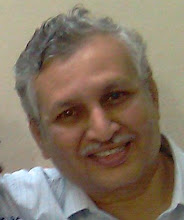
Dr Kallam Anji Reddy (1941-2013): Game-changing Techno-Entrepreneur

Dr Kallam Anji Reddy, the Founder-Chairman of India’s Dr Reddy’s Laboratories (DRL) and an undisputed doyen of the Indian pharmaceutical industry passed away in Hyderabad on March 15, 2013. In his sad demise, the country lost a brilliant and creative first generation entrepreneur who was driven by a passion for science and technology. He was truly a game changer for the Indian pharmaceutical industry who placed the company on the global pharmaceutical map with cost-effective bulk drugs (or, active pharmacutical ingredients) and affordable generic formulations (or, finished drug products), several of them with path-breaking patent challenges. He was the first to lay the path of basic research and drug discovery in the Indian pharma, and was the inspiration and motivation for several other firms to emulate him in terms of not only APIs and generics but more importantly, drug discovery research. Under his stewardship, DRL which was set up with a seed capital of just Rs 25 lakhs (USD 50,000) in 1984 grew to be a Rs 10,000 crore (USD 1.8 billion) globally diversified pharmaceutical corporation by 2012 with several core research and manufacturing facilities in India, and employing  over 16,000 employees in India and abroad.

Dr Anji Reddy, a recipient of India’s third highest civilian honour Padma Bhushan in 2009, rose from humble agricultural roots. A son of a turmeric farmer in a village called Tadepalli, near Guntur of Andhra Pradesh was a combination of science and technology. He graduated from Bombay University in B. Sc. (Tech) with specialization in pharmaceutical science and fine chemicals, and went on to obtain his Ph. D. in chemical engineering from the famed National Chemical Laboratory in Pune. After his studies, he joined in 1969 the government owned Indian Drugs and Pharmaceuticals Ltd, which was set up to ensure self-sufficiency in drugs and medicines. His entrepreneurial spirit made him set up Uniloids in 1976 with his partners, which he later sold of, and Standard Organics Limited in 1980. He later on went on to set up Dr Reddy’s Laboratories in 1984 and built it into a global pharmaceutical corporation, listed in Indian stock exchanges and New York Stock Exchange (NYSE). The current market capitalization of DRL is Rs 30,000 crore (USD 5.4 billion).
In demeanor, Dr Anji Reddy was always unassuming and self-effacing, belying his stature and the great regard in which he was held. There would, in the coming days and weeks, be many tributes and eulogies to the life and achievements of Dr Anji Reddy from his family, peers and organizational followers, bringing out several known and unknown facets. His own biography, which he is reported to have completed despite his illness of the last several months, would probably sharpen his expressed thoughts and obvious achievements and unravel his embedded ideology and silent initiatives. When an accomplished leader passes away, the best way to pay a tribute to his memory is by synthesizing and distilling his leadership model so that budding entrepreneurs and aspiring professionals can have a template that they can follow or adapt. This blog post endeavors to delineate Dr K Anji Reddy’s scientific and business leadership model, reflecting the germination and growth of DRL as an institution of repute.  The Kallam Anji Reddy-Dr Reddy’s Laboratories saga has six praiseworthy features of world-class entrepreneurship.
Science, engineering and economics
Business leaders in their use of science and engineering are of three kinds. The first class views science and engineering in terms of products and processes, and costs thereof as platforms for businesses. The second class views science and engineering as creators of value for customers and businesses. The third class, to which Dr Anji Reddy belongs, views science and engineering not only in terms of products and processes, costs and value, and markets and businesses but also in terms of sound and sustainable economics. Dr Anji Reddy transformed the economics of the Indian pharmaceutical industry both in a macroeconomic sense, laying the foundations of affordable generic medicines, and in a microeconomic sense, with scope and scale of production redefining industrial costs and global value arbitrage. His simple economic formula of what a drug costs in the US in terms of a Dollar should be made and sold in India for a Rupee was a simple but effective paradigm of considerable economic foresight. His unique combination of pharmaceutical science and chemical engineering became his, as well as DRL’s, core competence in developing high quality active pharmaceutical ingredients through reverse engineering and establishing operationally efficient global scale generic formulations. From Dr Reddy's accomplishments, it emerges that Science, Engineering and Economics is a knowledge triad of a higher elan business leader that transforms human development.  
Quality as the Q.E.D. 
Dr Anji Reddy was one of the early entrepreneurs who recognized that the higher quality of requirements of advanced markets such as the USA and Europe and complying with the regulatory standards of international regulatory agencies such as the US FDA was the sine qua non of sustainable pharmaceutical business. His first failures in meeting the quality requirements of Merck & Co for its bulk drug only prompted Dr Reddy to lay the foundations of quality focused US FDA compliant bulk drug plants, and later generic formulation plants. As early as in 1987, DRL secured approval from the US FDA for DRL’s Ibuprofen, opening up the US market for DRL. The series of bulk drugs such as Ibuprofen, Ranitidine, Ciprofloxacin, Methyldopa, Norfloxacin and Omeprazole as well as their follow-on products from DRL enjoyed huge world markets. Whenever standalone formulation companies desired complex products of high quality they preferred to rely on DRL despite the price premium. When new startups desired to establish US FDA compliant plants they sought talent from DRL. These establish that Quality is the paradigm of virtue that successful business leaders seek to prove and eventually establish beyond doubt. “Quality Enterprise Diffused” is literally and figuratively the Q.E.D. of sustainable business.
Talent in teams, teams with targets
The engine of growth for any organization is the intellectual power. DRL illustrates that when the founder’s intellectual power is reinforced by his team’s broader intellectual competencies, the organization moves into a targeted high trajectory of sustainable growth. Dr Anji Reddy has built DRL on three principles of talent, teams and targets. Whether it is bulk drugs, formulations or drug discovery world-class indigenous talent laid the foundations and built the superstructure of the DRL seen today. Some of the best names of Indian pharmaceutical science and technology are identified with DRL, even if they are no longer with the company. Dr Anji Reddy was also one of the earliest first generation entrepreneurs who saw merit in coalescing talent into business teams and eventually into strategic business units. The growth of bulk drugs, global generics, branded formulations, custom synthesis and basic drug discovery was based on custom-inducted and business-focused talent teams. The third component of a talent-focused organization is targets. The best targets that an entrepreneur develops are not metrics of turnover or profits but are mega visions of transformation. When as a student Anji Reddy who saw a Pfizer plant thought of building a Pfizer-like plant as his entrepreneurial venture or after he set up his business targeted his pharmaceutical corporation to be a "Pfizer" or "Merck" of India driven by innovation, he was articulating concisely and passionately a visionary target that inspired him and his talented teams.   
Professional family, family of professionals
DRL as a first generation enterprise has been an entrepreneur driven business. With the induction of Dr Anji Reddy’s son-in-law G V Prasad  and son Satish Reddy as the chief executive officer and chief operating officer in 1986 and 1993 respectively, DRL became a compact family run business. Yet, it was a highly professional second generation that came on board. Both the next generation leaders were very well qualified and have admirably learnt the ropes on the job, building businesses and operations. Dr Anji Reddy ensured that the leadership roles to them played to their strengths, with GV Prasad focusing on strategy and generics business and Satish focusing on operations and emerging markets, and Dr Anji Reddy himself focusing on drug discovery and overall mentorship. In addition, the troika of family leadership ensured that they were governed by a strong board of directors of eleven, in which all directors except the three were independent directors of high repute representing diverse domains. In fact, in a recent survey DRL board was judged to be a top ranking board in India acclaimed for its corporate governance. The uniqueness of the family team at the helm has been that it surrounded and reinforced itself with professionals of outstanding expertise in their domains.  Classy chemistry expertise, outstanding generics leadership, creative medicinal chemistry and discovery biology and savvy commercial, business, financial and legal strengths, among other domains, together made DRL a professional powerhouse. Dr Anji Reddy established that entrepreneurial chemistry and creativity is highly synergistic with professional expertise and integrity, both needing to be perpetual partners in progress.
Risky challenges, global rewards
Most successful leaders are intelligent and empathetic using their traits for planning and executing but all are not adept at taking investment and business risks based on the organization’s intellectual competencies as well as networking and negotiating capabilities. Dr Anji Reddy took intellectual and investment risk-taking progressively up four levels, ahead of most Indian pharmaceutical companies. DRL was the pioneer, in the 1980s, in taking the first risk of reverse engineering patented molecules through innovative non-infringing processes, and manufacturing them, leveraging India’s prevailing patent regime. This risky initiative handsomely paid off with the bulk drugs becoming the foundational cash generating business for the next wave of generics risk-taking. The next was in the 1990s when the generics business unit began embarking on the Paragraph IV, First to File (P4 FTF) challenges under the Hatch-Waxman’s Act of the USA which provided options for innovative challenges based on patent litigation in the US legal system. DRL’s Fluoxetine P4 FTF patent challenge against the innovator of the molecule has been a game changer leading to the dominance of the Indian pharmaceutical industry in the US. DRL has since built up one of the largest portfolios of P4 FTF products in the generics world.  This second level of risk-taking enormously benefitted DRL and positioned it as an awe-inspiring player in the generics space. The third level of risk pertains to aggressive internationalization of its branded formulations business. Russia has been a beacon of success in this dimension while a few others have been less than successful. DRL's success in creating the dossier framework for global markets has prompted GSK to ally with the company for emerging markets. The fourth level of risk pertains to Dr Anji Reddy’s passion for basic drug discovery research with the aspiration of globally commercializing a DRL discovered new chemical entity. Despite the high investments and overwhelming uncertainty of payback in drug discovery, he founded as early as in 1993 Dr Reddy’s Research Foundation with chemistry and biology infrastructure in India and also established overseas discovery infrastructure progressively. Though the early discoveries failed to make it past all the human clinical phases, Dr Anji Reddy still remains the icon of drug discovery in India. Calculated risk taking initiatives based on indigenous intellectual capability have been part of Dr Anji Reddy’s leadership profile.  
Enabling and sustaining good life
Pharmaceuticals support life, and the pharmaceuticals industry is a noble industry by any yardstick. If pharmaceutical corporations and the leaders of the pharmaceutical industry deploy their corporate and personal wealth to enable and sustain good life, they would be even more significant corporate citizens. DRL’s focus has primarily been on three life-altering areas: Patient Care, Education and Livelihood. The company channels its wide network of social activities through Dr. Reddy’s Foundation (DRF) and Dr. Reddy’s Foundation for Heath Education (DRFHE) which address health education needs and patient care activities. DRL also creates positive impact on communities through Corporate Social Responsibility (CSR) teams in each location. Two of the social responsibility initiatives undertaken by Dr Anji Reddy illustrate a silent social facet of his entrepreneurial profile.  He spearheaded the Neo-natal Intensive Care and Emergencies Foundation called NICE Foundation, the only institute for new-born babies in India. He also set up Naandi Foundation (Naandi meaning start of a new initiative) for providing safe drinking water in rural areas. The foundation provides midday meals to 1.3 million government school-going children and farmers.  Anand Mahindra, the Head of the automobile conglomerate Mahindra & Mahindra tweeted “R.I.P. Dr Anji Reddy. Your business achievements were well known, but you were an unsung hero for your transformational philanthropy.”     
 
Game changing techno-entrepreneur
The author of this blog post has had no direct professional contact with Dr Anji Reddy except meeting him in a few pharmacutical forums. However, as an observer of Dr Anji Reddy's leadership model and DRL's continuous growth, the author believes that Dr Reddy’s contributions of entrepreneurial and business leadership have been truly exceptional as synthesized in this blog post. Successful entrepreneurs typically create sustainable institutions that create products and services for markets and generate returns for investors. A few entrepreneurs, however, craft and execute game changing strategies for their enterprises that fundamentally redefine the very structure and strategy of entire industries. Dr Anji Reddy clearly belongs to this illustrious genre of “super-entrepreneurs” in so far as the Indian pharmaceutical industry is concerned. His transformational contributions to the Indian pharmaceutical industry will remain unsurpassed for a long time to come. The epithets “doyen”, “icon” and “pioneer” describe his game-changing techno-entrepreneurial leadership perfectly. Dr Kallam Anji Reddy, the super-entrepreneur who wanted to create a "Merck" in India has certainly created, in Dr Reddy’s Laboratories, a robust and growth oriented pharmaceutical corporation that has earned global respect, and has in the process left an indelible mark on the Indian pharmaceutical canvas.
Posted by Dr CB Rao on March 17, 2013     


Sunday, March 10, 2013

Harnessing Emotions at Workplace: The Model of Intelligent Emotional Balance (IEB)

Emotions are strong feelings that people have.  Emotions can be positive as well as negative. Typical emotions, positive and negative, are happiness and sadness, liking and disliking, calmness and anger, politeness and bluntness, confidence and fear, friendship and enmity, trust and mistrust, kindness and jealousy, gentleness and aggression, so on. Given that organizations are nothing but groups of people, it is but natural that emotions are a part and parcel of a typical workplace. The emotional profile of a manager or a leader, in fact, gets identified as a dominant characteristic of a manager or a leader as his or her management and leadership style, and becomes a visible and consistently felt experience for the larger organization. There is often a misplaced view that in organizations negative emotions must necessarily be eliminated and positive emotions mandatorily embedded at the work place. This is a simplistic view of how business processes and organizational behaviors work.

There have been several theories of emotions from the centuries’ prior days of Aristotle to the contemporary days of Stephen Covey, highlighting the need to understand human emotions and for achieving mastery over emotions. In fact, the phrases “emotional balance”, “emotional quotient” and “emotional intelligence” have spawned several journal articles and management books on how executives could achieve mastery over their emotions to be effective at the workplace. Important as these are, there is a need to view emotional management at the workplace in terms of intelligent business process management rather than only as an introverted framework of behavioral correction. Fundamental to the concern on management of emotions is the fact that emotions could affect rational thinking and actions. The paradox of human emotions is rendered more complex when organizations are expected to be embodiments of logical and rational approaches in the conduct of their businesses on one hand, while being driven by hues of emotion such as aggression and passion in achieving superior performance on the other.
Contextual
For most part, emotions need contexts to express themselves. The contextual basis of emotions is that the gap between expectations and accomplishments sets the tone for emotions. If the leader is a stickler for perfection, a perfect process or a perfect outcome from his subordinate makes him or her happy while a shoddy process and outcome makes the leader angry. In the same interaction, if the subordinate knows what perfection is, he or she would display confidence or fear while presenting the process or product. From the simple example that has been considered, it is clear that emotions emerge from the gaps between that exist between expectations and outcomes. The other contextual part of emotions is that people come into organizations as bundles of emotions themselves. In addition, people tend to be of different personality types which will invariably influence how people emote at the workplace. Many employees also do not adequately understand the nexus between their individual roles and performance and corporate goals and outcomes, and anticipate rewards independent of performance. The alignment or gap between career objectives and career growth also leads to emotional dynamics.
Emotions are sharpened by the way they are expressed.  The culture of expression, if it is positive enhances the helpful impact of positive emotions and moderates the erosive impact of negative emotions. The culture of expression, if negative, achieves exactly the opposite. The expressions of verbal language, positive or negative, are further accentuated positively or attenuated negatively by the body language, positive or negative. The part that communication plays in moderating or amplifying emotions is not well understood. Effective and controlled communication is part of emotional balance in organizations. Emotions are not necessarily correlated to circumstances. Crisis situations, contrary to perceptions of chaos, helplessness and stress, may actually bring out positive emotions of sharing and caring, and of strength and stability amongst the team members. On the other hand, luxurious outcomes may bring out negative emotions of envy and jealousy, and of mistrust and aggression among them. The paradox of the contextual perspectives is that emotions are impacted by a number of internal and external contexts.
It is also incorrect to assume that positive emotions are always beneficial and negative ones detrimental. If team members are not mature enough and instead are subservient to emotions in appraising performance, performance management would be at a discount. In such cases, people may get formatted into emotional archetypes as they and their supervisors lack the ability to differentiate task delivery from emotional wrapping. Emotions, whether positive or negative, are likely to introduce skew, bias and halo effects in relationships if emotions are not objectively and discriminatingly expressed or understood. Emotional balancing may help the groups manage positive or negative performance in a stable manner only if emotional expression is indexed to the context of task delivery of individuals, teams and organizations. If managers and teams, as well as cross-functional peers ensure clear target setting with joint ownership, clarity and alignment on objectives and resources and evaluation criteria, the chances for emotional upheavals, positive or negative, would be minimized. 
Another hypothesis could be that industry context would determine the emotional texture of an organization. Market and customer facing organizations may be postulated to be more emotionally sensitive compared to manufacturing organizations. Domains like advertising and consumer research may be considered to be more emotionally interactive than others. In practice, however, emotional sensitivity and responsiveness is related more to expectations-accomplishments gap and expressions-communications competency levels, independent of any domain or industry. The organizations and team members of the movie industry which is dominated by emotive artistic elements in all its aspects, for example, has all the interpersonal emotional fallibilities as any other industrial organization; if at all, the movie industry seems to have an even greater level of emotional dynamics. 
Tolerances and controls
As in engineering design, the theory of tolerances plays a vital role in emotional management too. People, in the organizational context, must observe tolerances in mutual expression of emotions. While not all emotions may be appropriate in an organizational context, there are a few which have relevance. While a gentle, trusting, caring, sharing and joyous emotional outlook may enhance positive energy in a team, excessive levels of such positive emotions could be counter-productive. While fun at work is desirable, it cannot be only fun at work to the detriment of stretch and challenge at work. At the same time, an aggressive, evaluative, demanding, consolidating and somber emotional outlook may bring out the right amount of fear and adrenal rush in the face of adversity or complacence. While fear is the key to compliance and achievement, fearful authoritarianism cannot be endorsed to the detriment of creativity and innovation at work. Clearly, only if teams are able to play upon their positive and negative emotions within fine tolerances that are synergistic in organizational context, emotions can be helpful.    
At the core of intelligent emotional balance lies the ability to understand the emotional sensitivity of self and others, and develop the ability to control the emergence and expression of emotions in organizationally appropriate manner. This approach does not mean that people should or would lose their spontaneity. It merely recognizes that an organization has certain primary performance metrics to deliver on a day to day basis. A culture of emotional sensitivity, in fact, helps the team modulate performance expectations and delivery achievements. The model of intelligent emotional balance has three vital components; the first, understanding the importance of a person’s own and his team members’ emotional proclivities,  the second, an understanding of the tolerances within which mutual emotions become synergistic rather than antagonistic and the third, a competence to control emotions to be supportive of a virtuous organizational culture. An ability to retain rationality, objectivity and logic in the face of exciting opportunities and depressing setbacks alike with the just right touch of humanism helps spread the positive vibrations of energy across the organization.
IEB model in practice
An organization can achieve intelligent emotional balance when its leaders practice the optimal business processes that enable a sense of fulfillment in day to day work and thereby enabling appropriate emotional balance.  The optimum business process does not end merely with objective setting or questioning but incorporates problem solving where required.  A leader who sets a challenging technical task for his subordinate logically expects the subordinate to deliver, failing which finds it rational to take the subordinate to task. The IEB model, in this case, expects that the leader does not merely stop at expressing his unhappiness but also empathizes with the subordinate’s incapacity to deliver and sets about to work with the subordinate to develop a solution. Once the subordinate develops the solution to the leader’s satisfaction, the leader joyously celebrates with the subordinate, thus wiping clean the earlier unhappiness and opening a new chapter of collaboration.  In another case where the subordinate succeeds in terms of delivery, the leader celebrates with the subordinate first but goes on to prescribe a higher level of challenge for the subordinate that leads the organization onto a path of continuous achievement and fulfillment.
A purely emotional view of achievement leads to a sense of complacence and distances the participants from the competitive scenario that exists in the outside business world. Setting expectations appropriately, reinforcing competencies commensurately, providing resources adequately, evaluating results objectively, coaching for improved results empathetically, learning from failures confidently and celebrating successes with humility provides an optimal intelligent emotional balance in an organization. The leaders and managers can help facilitate institution of intelligent emotional balance by being themselves role models of the following: (i) equidistance from, or equal attachment to, functions and people, (ii) adaptive of rational and emotionally balanced objective business and communication processes, (iii) focused on competency development and task delivery, (iv) controlled and titrated in experiencing and expression of emotions, (v) learning openly from setbacks and failures, and (vi) optimally celebrating successes with humility. The foregoing leadership model would help institutionalize the broader Intelligent Emotional Balance (IEB) model on a sustainable basis in the organization.
Posted by Dr CB Rao on March 10, 2013

Sunday, March 3, 2013

Cascade and Cluster Strategy for Industrial Development: A Potent indigenization Prescription for the Indian Industry

India, undoubtedly, has been a leader in tablets and other kinds of pills and diverse pharmaceutical products. Pharmaceutical development and manufacturing has been one domain of manufacturing that has brought out a Made in India advantage onto the global arena. Of late, however, Indian manufacture has been demonstrating early shoots of manufacture and global challenge in another kind of tablets - the electronic tablet computers that were hitherto considered the preserve of the likes of Apples and Samsungs! In fact, the launch of an indigenous 5” tablet by an indigenous manufacturer at almost half the price of a ruling imported tablet product has led Samsung to announce posthaste a new tablet model at a dramatically reduced price. This development points to the possibility that with some concerted government-industry action electronics manufacture could be a new wave of growth for India.  

Electronics need not be seen as the only early shoot of industrial manufacture. There are several other industrial manufacturing segments, some near the maturing state and some in the emerging and growth stages. These include aeronautics, space vehicles, automobiles, heavy engineering, electrical products, white goods and consumer items, to name a few. There is, of course, the caveat that in each of these certain critical internals are based either on overseas technical designs or imported into the country from the collaborators. Examples could be engines, compressors and the like. Yet, even in these areas capability exists to build indigenously capable systems, for example cryogenic engines or ejection systems in space equipment. It is instructive that the development of Indian industry occurred when phased manufacturing programs as in the case of automobiles and national policy missions as in the case of space engineering were put in place.
Singular drive, plural participation
There are two main considerations that drive indigenous manufacture. Firstly, the Original Equipment Manufacturer (OEM) must feel and demonstrate the passion for developing a completely indigenous product as a long term goal (say of 5 years). Secondly, the OEM should be willing to spread the same passion to multiple industries to participate and support the indigenous OEM product. The national space mission, for example, became an icon of indigenous success because of its efforts to draw in as many as two hundred industries in the development of indigenous space systems and equipment. Maruti Suzuki became the most indigenized car by bringing along all of the Japanese component makers to India. There is, however, only a limited indigenization that an individual firm can prompt. An automobile OEM typically can influence its component makers to come to India but not necessarily the raw material makers, for example steel.
OEMs require more than normal procurement or vendor development activities to develop high quality, low cost indigenous activities. A complete supply chain, cascading the Bill of Materials (BOM) down to the basic materials would need to be drawn up to establish, first the plurality of participation that is required and next the suitability of the available component and materials infrastructure. A detailed gap analysis would then establish the task of development at hand. While it would be impractical and inefficient to try to develop the entire new BOM of an OEM product to new standards, a judicious mix of indigenous development and import access should be examined on a case by case basis. The strategic plan for total indigenous development has several imponderables to consider, essentially related to the technological and investment considerations.
Cascade, cluster
To establish a complete indigenous industrial infrastructure that enables an OEM product with 100 percent indigenous content, there exist two approaches. The first approach is the cascade approach discussed briefly above. In the cascade approach, the drawback or limitation is that what works at the OEM level does not necessarily apply to the steel sheet level. In a typical automobile weight of 1400 kg, approximately 75 percent is metal weight (iron, steel and aluminum). Steel by itself constitutes 60 percent at 800 kg.  Considering that most cars in India are small cars, the average weight of a car could be 1100 kg and the average weight of steel per car could be lower at 600 kg. India produces 3 million cars which is an economical volume of production. The three million per annum car output requires a steel tonnage of 1.8 million per annum. This level of steel tonnage is, however, less economical for steel plants. Moreover, the lead time for a new steel plant could be as high as 10 years and for modernization 5 years. On the other hand, changes in steel technology as a subset of automotive technology could be occurring every 5 years. The investment in a steel plant’s technological modernization could be three times that of an automobile plant’s modernization.   Such imbalances in technological, lead time and investment considerations in OEM and basic material industries make a coordinated cascade approach that seeks complete indigenization across the entire industrial spectrum more of an aspiration than a practical proposition.
In the cluster approach, several indigenous industrial infrastructural capabilities are created regardless of any coordinated pull from the OEM sector. This could be infrastructure in all kinds of metals, machine tools and plastics, for example. Early industrialization in India followed this approach. There are again two fundamental considerations in the cluster approach.  The first consideration is that of creation of islands of excellence in various industrial segments which like bubbles would grow and coalesce into larger clusters. The second is that individual industries, if developed well, provide their own push effect to overall industrialization. The cluster approach of indigenous industrialization works well in the short and medium term but does not provide spread or competitiveness in the long term. In India, for example, steel and machine tools were developed as the first islands of indigenous industrialization without giving any fillip or support of any sort to the automobile industry which is one of the most important users of these two segments, and which also sets the higher standards of technology  (in terms of machining and material tolerances). As a result, not only the automobile industry lagged behind domestic needs for decades (until Maruti Suzuki came on the scene in the 1980s) and international capabilities but also the enabling industries of steel and machine tools remained uncompetitive in both quantity and quality.
Integrated development
Integrated development of a spectrum of industries with a simultaneous approach of cascade and cluster strategies is well merited. The success of the Indian National Space Mission in accomplishing its mission with largely indigenous clusters is a great example of combining the cascade and cluster approaches. Whatever be the past considerations in not applying such a combined approach in indigenous industrial development, the move forward requires such an approach, particularly because India has achieved globally critical mass in a number of industries. India, for example, is the sixth largest producer in the world of all four wheeler automobiles with an annual output of 4 million units (nearly 6 percent, out of a global output of 70 million units). India is also the fifth largest producer of steel with an annual output of around 80 million tonnes (5 percent, out of a global output of 1600 million tonnes).  In terms of cellular phone usage, India is the second highest user in the world with cell phones in use of 1.2 billion (20 percent, out of the world’s use of cell phones being 6 billion). There are, however, a few industries like machine tools where India has the potential but is just 3 percent of the global output in dollar terms, and just 10 percent of even the Chinese machine tool output.   
India can catapult into global industrial output if it adopts an integrated strategy of cascade and cluster. For the cascade component of the integrated strategy to be successful, India must choose industries which would move in alignment with India’s population and the country’s changing demographic, employment and income profiles, all of which are a clear positive for maximizing industrial output. Electrical, electronic, computing and telecommunication devices and equipment, automobile, rolling stock, aircraft and machine tool products, and chemical, oil and gas and pharmaceutical products, for example, can define and pull the cascade. Semiconductor, chip, steel and other metal and non-metal, forging, casting, tooling, mold and die industries could be the clusters that support the cascades. The combination of cascades and clusters could together boost indigenous industrial production where consumption and usage has already reached (or will reach) critical scale. The implementation of the cascade and cluster strategy requires active collaboration between various industries on one hand, and the industry in the aggregate and the governments, central and state, on the other.
Prescriptive need
However good the concept of cascade and cluster industrial paradigm is, it cannot be proactively initiated and effectively implemented without a prescriptive approach. The prescriptive approach requires industry associations to develop strategic plans by which industries can be effective in triggering cascades and clusters. It also requires the governments to provide material support and regulatory direction to participate in the cascade and cluster strategy. If Japan could become a global industrial power by inter-industry and industry-government collaboration facilitated by the government agencies (for example, MITI), there is no reason why India cannot excel in the same manner. The fundamental transformation sought to be achieved by the Indian tablet devices could be indicative of the right prescription for the future health and vigor of Indian indigenization.
Posted by Dr CB Rao on March 3, 2013


Sunday, February 24, 2013

Experiencing, Partitioning, Ideating and Engaging (XPIE): A Philosophical Approach for Effective Time Management

In human life, time is the most important resource that is non-controllable, non-renewable, non-substitutable and non-recoverable. It is also one resource whose march in terms of units of time (say, seconds to days) is pre-determined (and, to that extent predictable) and whose total availability in one’s life (in terms of one’s lifespan) is unknown (except as a trend, expectation or hope). This is probably the reason for the emergence of disparate philosophies as to how one should live one’s life, from completely materialistic and opportunistic to completely philosophical and religious. Most, however, are subject to multiple combinations of approaches that vary with the age and phase of life. Some want to learn more and some others want to earn more, each in the shortest period of time. Most want to save more and a few want to share more, each in the shortest period of time. The underlying principle in any approach to utilizing time should be to make an optimal and effective use of time one is blessed with. Effective management of time is, verily, the only way to a fulfilled life.

 Human ingenuity in technology has enabled the human race dramatically shrink the times taken to perform any task, be it travel, communication or any development activity. Be that may, the paradox of spending each unit of time effectively at an individual or team level continues unresolved. Hours and hours, for example, are spent (wasted, according to elders) by the young generation on the digital social media which connects the world of known and unknown in nanoseconds! Despite real time telecommunication connectivity cross-border agreements take far longer nowadays than they took in the telegram and telefax days, decades ago. Computerized designing and computer simulation of prototypes has not dramatically impacted the way automobiles are refreshed each year. In summary, more iterations are performed and more choices are evaluated in lesser units of time per iteration or evaluation, eventually resulting in the same, if not higher, amount of overall transaction time.
Perceptions on time
Individuals and corporations are faced with the timeless problem of effectively utilizing time. Competing and conflicting social and organizational pressures on time cause individuals to respond reactively rather than be in command of any particular facet. Competitive and volatile economic and business conditions cause companies to race desperately rather than be deliberative before being decisive. Individuals and corporations, however, are less than aligned how they could together utilize time as their synergistic competitive advantage, on an end to end basis. Some corporations and a few individuals understand that personal individual productivity could translate into corporate productivity. Yet, most corporations and most individuals tend to avoid any interlink between time management at work and time utilization outside. The fact, however, is that like safety and quality time management is a fundamental attitude and behavioral predisposition of an individual that could collectively impact a corporation’s own ability to be time-effective.
Like a healthy employee is a productive employee, a time-conscious individual would be a productive employee. In today’s world, in fact, an individual who manages his off-work time effectively would not only be developing varied capabilities and fulfilling multiple responsibilities but also achieving better professional and personal life balance. Typically, the same unit of time could be put by different individuals to different uses, from sports and hobbies to learning and development, and from family responsibilities to social service depending upon each individual’s professional and family ethos and value system. For a passionate sports lover, watching a cricket match over five days would be a fulfillment rather than a waste. For a workaholic, however, any time spent on activities not related either directly or indirectly to work would be a complete waste. Individuals perceive time in terms of their likes and dislikes rather than in terms of how effective or ineffective they are in terms of effectively utilizing it.  
Experiencing versus traversing
There are many books on effective time management, each with different tools and techniques of time management. The really effective management of time is really one of experiencing time in its entirety and not merely travelling through it. Reverting to the example of the passionate sports lover watching the five day cricket test match, he can spend all the five days only clapping and enjoying  (thus adding no value to himself) or spend the time in addition analyzing the batting, bowling and fielding nuances (thus honing his cricketing skills). Better still, if he is an amateur cricketer model himself after his favorite cricketing hero (and become a cricketing sensation himself!). A foodie may merely eat and enjoy an elaborate time consuming multi-course dinner or also observe the culinary art and science on the table, and add to his or her own culinary repository.  The principle of experiencing through time is focusing all of one’s sensory faculties in living through an activity.
The core of experiencing an activity is concentration on the activity. To be able to concentrate on an activity one must primarily be able to enjoy the activity. But enjoyment by itself does not lead to concentration. Concentration is a faculty that needs to be developed with dedicated effort. Rapid  learners learn fast by concentrating on the subject matter as they read through the matter. Negotiators sharpen their skills by not merely exchanging viewpoints but observing the body language of individual team members and their silent and vocal interactions. Effective speakers make impactful use of their time not merely by delivering a speech or relying on a powerpoint presentation but more by connecting with the audience and creating a communication experience with requisite pauses and triggers and selective amplitude. It is probably not as much important as to what has been the amount of time spent on any activity but how intensively one lives through it.
PIE as a mind option
Management of time is a matter of mind; that too, a trained mind. In times one is not into specific activities of life, should one relax without any activities or invite new activities that add joy into one’s life?  Whatever be the options available in today’s event and activity hyped world, emptiness is not an option. At one level, one could implement several options to be efficient and effective in whatever one is engaged in, including establishing an optimal work life-personal life balance. Effective time management would be a matter of competencies that ensure productivity and attitudes that abhor waste of time. A more practical approach would be to partition time on a daily, recurrent basis. One may consider the 24 hour day having non-exclusive and exclusive zones. The non-exclusive time zone is the larger part of the 24 hour daily life, say 22 or 23 hours per day, which is devoted to all the socially, economically and naturally required daily activities. The exclusive time zone comprises the balance 1 or 2 hours which one may use exclusively for avocations that are strictly personal and fulfilling. These could be exercising, painting, gardening, meditating, networking, social service or whatever. The idea of partitioning the day into two parts; the larger non-exclusive part known and dedicated for others, and the smaller exclusive part known and dedicated only for self-development and self-fulfillment is an approach that could lead to a significant uplift to one’s life.
There can, indeed, be no time in one’s life when one can simply do nothing valuable. From ideating to meditating, it is possible and necessary to engage a wandering mind into creating value. Apart from partitioning, and in the partitioned parts of the day, one can do two important activities of the mind that can be productive; one is ideating, and the other is engaging. Converting myriad thoughts into ideas, preferably focused ideas, would be the greatest help one can render to oneself for having been blessed with a thinking brain. A brain that is wired to be creative and innovative could be a genetic predisposition of really a blessed few but a brain that is disciplined to be thoughtful and ideating is within everyone’s capability. However, just being thoughtful, reflective and ideating is not enough. One needs to be engaged with oneself and one’s ideas. Being engaged means developing and sustaining interest in matters that are of relevance, and taking them to fruition over time, creating value for oneself, one’s family, one’s organization and the broader society.
XPIE, an integrated approach
The author’s XPIE model of Experiencing, Partitioning, Ideating and Engaging provides individuals with a superior ability to effectively manage time. Experiencing time, not merely wading through it, is the first requirement of any effective time management. Genuine and authentic experiencing creates value by itself from the each unit of time one spends. Partitioning of time into excusive and non-exclusive zones, being particularly thoughtful, reflective and ideating, and finally staying engaged would serve as an effective time management paradigm. The ability to absorb each activity as a value-added experience and stay thoughtful and engaged on ideas that appeal to one’s life system is crucial to achieving the ultimate effectiveness of time in one’s life. 
Posted by Dr CB Rao on February 24, 2013             

Sunday, February 17, 2013

Synergy of Innovation and Perfection: Towards the Ultimate Competitive Advantage

Apple is reportedly working on a smart watch, called as iWatch by the media.  Will this be a successful product? Probably yes, if one were to consider Apple’s string of successful products such as iPod, iPhone and iPad; need not necessarily be, if one were to take into account its occasional failures such as its early generation gaming devices and portable computers.  Apple’s recent successes have, in large measure, been due to its ability to design, manufacture and deliver an innovatively perfect product for the market. From the looks and objectives, iWatch seems to have the innovative specifications and the perfect form factor that are in keeping with Apple’s core competence of innovation coupled with perfection. Apple’s track record does suggest that the combination of innovation and perfection is a pathway to success.

A study of several successful firms suggests that introduction of new products or services on a systematic basis is a key factor of success, but only if such products and services are delivered with perfection, that is, without any faults or weaknesses, and in a completely correct and exact manner. The relative importance of innovation and perfection in the combination has, however, been a matter of subjectivity. Companies that sparkle with innovation but fail to deliver it with panache have been far less successful than companies which have been merely followers but delivered products and services of impeccable quality. It would, therefore, appear that companies need to not only ensure both innovation and perfection but also get the right balance of innovation and perfection that makes economic sense.
Innovation
Innovation has no end. What appears to be an innovative product at the time of innovation or commercialization is soon rendered obsolete by a more innovative product or by a clone that is designed and manufactured more perfectly. Smart phones, for example, led a wave of innovation in mobile phones and convergence devices. The current experimental trend of iWatch and Google Glasses indicates that certain products, be they computers, smart phones or cameras, can be rendered obsolete by the trend of wearable or communicable computers that these smart watches and smart goggles signify. Companies which recognized the cycle of innovation and obsolescence, and have in addition made their own products obsolete by more innovative products have enjoyed consistent success. 
Innovation has no limits. What appears to be beyond the reach of a first innovation becomes a facile task for the subsequent innovations.  Having 256 MB RAM was once a design feat for computers. Today, a smart phone is designed with 2 GB RAM and quad-core processors. HD screen was unthinkable in a cellular phone not too long ago. HD screen capability of 1080p is now passé in contemporary mobile phones. iWatch with Bluetooth and wireless connectivity could lead to remote connectivity between the wearer and his or her devices easy. With development of needleless diagnostics, Apple may develop its iWatch into an iDoctor next. The more innovatively hardware and software are designed, and more importantly they are integrated, the more innovative a product would be.
Innovation has no boundaries. What appears to be a partial innovation in a component of a product can be a dominant driver of total product innovation. Samsung may be a follower in smart phones but its innovative edge in touch screens, ranging up to the latest large format Organic Light Emitting Diode (OLED) screens as well as bendable and extendable OLED screens has driven innovation in its smart phones. Ordinary components can be assembled into an extraordinary product through software innovation as Apple has demonstrated. As firms systematically specialize in innovation, they also acquire core competence in certain categories of innovation, as exemplified by Toyota in hybrid vehicles, Intel in computer chips, Qualcomm in mobile chips, Nintendo in gaming devices, BD in needles and so on. Continuous and systematic innovation leads to product specialization on one hand and erects entry barriers on the other.
Perfection
Like innovation, perfection has no end. As nano measurement technologies emerge, tolerances can be defined more tightly, for example. Perfection, however, tends to be comparative and contextual. Perfection is measured against the specifications set by the designer. Companies committed to high quality go in for high specifications to set the design tone for perfection. Each successive generation of products sets higher standards for perfection. In an automobile engine, spark plugs, for example, have become 30 percent thinner while moving parts like pistons, connecting rods and crankshafts have seen reductions in weights ranging from 30 to 50 percent. Perfection in measurement technologies has enabled such improvements.
Unlike innovation, perfection has a limit, a limit that is Zero in defects of manufacture and another limit that is infinity in “meantime between failures (MTBF)” of a product in service.  These limits are not easy to achieve, though. They are dependent on the sophistication, consistency and reliability of the manufacturing equipment and the manufacturing process as well as the quality of materials of manufacture on the other.  Continuous improvements have led automobile component makers to specifying defects from defective parts per  thousand that was in vogue years ago to defective parts per million that is the standard more recently. Six Sigma is another approach that tightens the limits for process variability. The term Six Sigma originated from statistical modeling of manufacturing processes and denotes 99.99966% of the products manufactured are statistically expected to be free of defects (3.4 defects per million).

Like innovation, perfection has no boundaries. It is not confined to products and services or product and process technologies. It is equally related to people and processes. Quality and avoidance of defects needs to be a credo, right from construction of language to manufacture of products, and from understanding consumer needs to fulfilling them. This assumes great importance given that consumers are more demanding, regulators are more watchful and competition is unrelenting. Over the last few years, millions of cars have been recalled by marquee companies such as Toyota, BMW and a few others, indicating that not being perfect has a significant cost attached to it. Perfection does not necessarily mean getting things right first time. There are enough practices in the design and manufacturing processes such as simulation and piloting to ensure that all defect-prone systems, causes and interventions are identified and addressed.
 
 Synergy
If innovation drives the boundary of user experience, perfection establishes the quality of user experience. Innovation has onetime design costs while perfection has recurring manufacturing costs. The combination of innovation and perfection thus determines the lifecycle costs for the company and the lifecycle value for the company. Depending upon their strategies, individual companies choose that combination which best suits their business position and market standing. The synergy of innovation and perfection comes from a combination of technology and people, a competitive and proactive mindset being the underlying behavioral foundation. Without innovation, perfection has little space while without perfection, innovation can go awry. This is best illustrated by the story of the modern day spark plug (first engineered in 1860  with the engineering of the internal combustion engine) which demonstrates how innovation and perfection are synergistic.
Spark plug is the heart of the internal combustion engine which in turn is the core of the petrol-powered automobile.  Spark plugs have seen a leapfrog in sparking efficiency and maintainability over the last several decades due to a combination of the use of more advanced materials (innovation in materials sciences) and the deployment of tighter tolerances in each of the components, not limited to the electrodes (perfection in design and manufacture). Use of exotic iridium and platinum materials for central electrode and ground electrode respectively, and tight ultra-fine tapering and gap setting promote not only high efficiency sparking but also long life and more effective self-cleaning characteristics. The synergy of materials innovation and manufacturing perfection that the modern day spark plug represents is also illustrative of how innovation and perfection can be synergistic to achieve ultimate competitive advantage for firms.
Posted by Dr CB Rao on February 17, 2013


Sunday, February 10, 2013

The Spectrum of Success and Failure, and the Nirvana of Performance

Every act has an outcome that is noted as success or failure. Act, in this context, is considered to include a plan or strategy that is intended to be implemented.  Human beings and organizational entities are increasingly concerned and preoccupied with the results or outcomes of their acts. The more the investment of resources in an act, be it time, effort or money, the greater is the expectation of success. The resources can be tangible ones as above or intangible ones such as encouragement, environment and ecosystem. The student who invests a lot in seeking admission to a premier course in a premium institute as well as his or her family that provides the resources, tangible and intangible, both aim for success and are deeply affected by failure. Organizational entities which are backed by founders, investors and other share holders with investments of resources are also severally and collectively impacted by successes and failures.    

Hindu philosophy, probably and other philosophies too, consider successes and failures as events in the wheel of life, scripted and written by Destiny. While the Hindu philosophy exhorts the individual to perform his ’dharma’ or duty, it expects the individual to perform the duty without expectations. It also postulates “nirvana’ as the ultimate life’s goal. Practically, however, in the day to day life individuals and organizations live to succeed while performing their duties, with the objective of success casting an overwhelming hue on the call of duty. Premier education thus becomes a lever for social recognition and financial prosperity for the student and the family. Growth and profitability become the platform for global competitiveness and economic dominance for the entities and investors. Various individual and corporate acts, including adoption of technologies and management processes, are designed and practiced by individuals and entities to achieve success and avoid failure.
Success and failure
Despite the fact that everyone sets up himself or his organization for success there tend to be successes and failures in the long run. There are two ways of looking at this; the statistical way and the karmic way. The statistical approach teaches us that in any universe or its representative large sample, the chosen dimension, be it an attribute or outcome, statistically follows a distribution, in most cases the normal distribution. There would be as many outperformers as underperformers around a statistically determined median, with the shape of the bell curve in terms of the peak and spread depending upon the characteristics of the universe. The extreme outperformers as well as the extreme underperformers have low probability while the mid-rangers have the maximum probability of occurrence. Extending the statistical approach, success and failure, in the long term, are seen as resultants of an environmental and a competitive landscape rather than as something that is completely determined by the performer.
The Hindu karmic approach, on the other hand, postulates as in Christianity that one reaps as one sows. The more good efforts one puts in, the more successful would one be. That said, what constitutes good and what constitutes bad is an individualistic determination. Going through a coaching institution would be good for one class of students while studying and stretching on one’s own would be good for another class. While a strategy of product specialization would be appropriate for one class of firms a strategy of product diversification could be appropriate for another class of firms. Even within the karmic approach, therefore, the choice of right seed could be of importance. While statistical approach focuses on the distribution of a range of outcomes, the karmic approach teaches us to choose the right ingredients. Yet, many individuals and entities fail to be circumspect and objective in their choices. The cloudiness is due to the spectral effects of success and failure on the psyche of individuals and organizations.
Spectral effects of success and failure
The outcomes of success and failure have three effects each on the psychology of an individual or entity. These six shades of success and failure together with the central disposition of being unmoved by success or failure together constitute the spectrum of success and failure. As is said, nothing succeeds like success, and nothing fails like failure too. As an individual or organization goes through repeated successes or failures the psychological disposition with which such repeated successes and failures are absorbed and assimilated in the human or enterprise psychological system determines the future propensity to success or failure. At the core of individual as well as organizational mindset, the individual constitutes the core, the only difference perhaps being that in an organizational setting the collective disposition of individuals determines the predisposition.
The three effects of success could be increasingly intoxicating on an individual or entity, eroding the very platform of success. The first feeling of “confidence” that accompanies initial success is a much needed and well deserved index of success. Repeated successes, unless one is mindful, lead to “complacence” of success whereby success is taken to be granted leading to a lowering of guard. When successes follow one after the other, by design or default, even in a situation of complacence, one tends to slip into “arrogance” of success, whereby one fails to accept feedback or ignores to act on it. Each of the three states has a different influence on the psychological disposition. Confidence (a belief in one’s ability to be successful) is an essential ingredient of success; it leads to success and also gets reinforced by success. Complacency (a feeling of being too satisfied to recognize the need for change) is an outcome of ignorance of the factors that drove successes of the past. Arrogance (a feeling of excessive pride that rejects or alienates other people and other inputs) is an outcome of the false sense of infallibility that some acquire as a result of continued success.
The three effects of failure could be increasingly debilitating on an individual or entity, eroding the resilience to recover and succeed which is possible even after failure. The first feeling of “concern” that accompanies initial failure is a much needed and well advised introspection of failure. Repeated failures, unless one analyzes the root causes, lead to “helplessness” of failure whereby failure is taken to be inevitable, leading to lowered or misdirected efforts to succeed. When failures follow one after the other, by design or default, one tends to slip into a state of “despondency”, whereby one fails to recognize the residual strengths and opportunities. Concern (a feeling of responsibility to an unexpected outcome) is an essential first step to recognizing failure; it leads to introspection which, in turn, must help eliminate causes of failure. Helplessness (a feeling of inability to take care by oneself) is an outcome of an inability to introspect for root causes which, in turn, makes one rely on external miracles than internal strengths. Despondency (a feeling of sadness and hopelessness) is the sense of defeat that some slip into as a result of continued failures.     
“Equanimity” is a calm state of mind that does not respond with excessive emotions, positive or negative, to one’s successes and failures. If the six effects of success and failure described above, ranging from “despondency, helplessness and concern” of failure to “confidence, complacence and arrogance” of success, are a sequential part of a spectrum, the mid-point is the feeling of equanimity. Equanimity does not mean that a person or an entity is either unmindful of successes and failures or driven by extreme confidence or despondency. Rather, equanimity requires that one analyzes one’s successes and failures in terms of key drivers and root causes respectively and works on them for ensuring further successes and overcoming failures. Each success and failure requires prompt and considered attention as part of the equanimity approach.
Nirvana of performance
Nirvana, in Hinduism or Buddhism refers to the state of peace and happiness that a person achieves after giving up all personal desires. Performance in life’s context requires pursuit of advancement based on core competencies and core values until one believes that the end state of total peace and happiness without any further desires (or ‘nirvana’) is reached. This state is typically reached at the end of one’s career, capping a series of successes and failures, with successes hopefully being many more than failures. In the pursuit of nirvana, however, one needs to manage the spectral effects of successes and failures in such a manner that one is within the band of confidence and concern, letting equanimity determining how one manages successes and failures.
For entities, however, there can be no end-state as they are perpetual instruments for generating economic wealth and social equity. The key to enterprise equanimity lies in the elegant and effective manner in which the team members individually and collectively manage the spectral impact of successes and failures. The considerations in the blog post are powerful emotional or philosophical guides to understand and manage the drivers and impacts of successes and failures. To provide a practical platform one would need to see specific examples of how the spectral effects are evident in leaders and managers, and how they impact the management of the spectral effects of successes and failures in their own and their entities’ lives. These would be covered in a sequel to this blog post.      
Posted by Dr CB Rao on February 10, 2013  

Sunday, February 3, 2013

Awareness and Resilience Management (ARM): Arming for Success and Happiness in Life

Life is unpredictable in terms of the opportunities and challenges it brings in one’s life. Life, apart from the fundamental foundation of being a part of the family, is also being a part of an organization. Such an organization could be anything, from the informal friends’ circle one develops in the childhood to the educational institutions that prepare one for independent economic life. Once a person is fully qualified educationally or vocationally, the firm or the agency that the person joins to earn a livelihood by contributing his intellectual and physical capabilities becomes the organization.  Being successful and happy as a part of the internal family organization and external professional organization is a key objective of every person.

This blog post explores what could make a person successful and happy in organizations. In doing so, it does not consider, solely for the purpose of the post, the nexus between professional and family success, and happiness; nor does it consider one outcome as the trigger of the other. The author believes that both the aspects of life, family and professional, are interrelated and can be optimized as a whole for superior success and performance, provided certain basic triggers and drivers of success and happiness in life are understood. However, given that the formal professional organization is an established form of organization which runs on certain principles, such organization, and individual in organization, is taken up to explore the agenda of success and happiness in life.
Success and happiness
Success and happiness are highly contextual and individualistic, defying easy and common definition. Not all successful people are happy people and not all happy people are successful ones. Success is seen to be a materialistic happening and happiness is seen to be a philosophical experience; neither being wholly true. Success is seen to occur within and as a result of certain consensual acknowledgement in an organizational system while happiness is seen to spring from within the individual; either being only partially true. Success is considered to be a measurable and visible metric while happiness is understood to be an immeasurable, embedded emotion; neither is unassailable as metrics and measurements may be wrong as much as smiles and symbolism may be faked. Success takes time to build and is sustainable (even in the face of failures) while happiness could be ephemeral and transient (and unrelated to successes or failures). Clearly, there are many gross and subtle definitions of success and happiness.
As there is no easy and universal definition of success and happiness, a few baseline criteria would be relevant, combining the context and the individual as well as the organization. Success is often based on accomplishment against a set of organizational and individual goals, in a manner that they are visible and measurable. Success is materialistic to the extent of building value for the organization and influencing career for the individual. Happiness is a sense of fulfillment that a person or a group of persons experiences when the person or the group receives economic or non-economic recognition, directly or indirectly linked to the person’s or the group’s contributions. Happiness is individualistic, and is both materialistic and philosophical, to the extent that depending on the philosophical and emotional disposition of an individual he or she may choose to accentuate or attenuate the happiness quotient. Be that as it may, it is important for individuals in an organization to understand the means of deriving and sustaining success as well as happiness.
Convergence within divergence
Success and happiness, though correlated with success being independent variable and happiness being the dependent variable, are not necessarily convergent phenomena. A baby instantly derives happiness when the baby achieves the success of cuddle from the mother. A child derives success when he or she accomplishes a mechanistic activity, seen to be beyond reach, and in the process of performance also derives much happiness. However, as the child grows into a student and as a student becomes an employee, what determines success and how it influences happiness become divergent. The goal of progressive organizations, not unnaturally, is to set up people for success to make them happy and also to have happy people in the organization so that the firm can be positioned for success.
It is up to the individuals to recognize that it is important for their lives to seek convergence of success and happiness. It is up to the organizations to facilitate a nexus between happiness and success by celebrating success. However, it is important for both the individuals and the organizations to build a culture of an organization that facilitates the convergence of success and happiness even though divergent parameters define and drive each outcome of success and happiness. This would be possible when individuals and organizations understand two fundamental concepts of integrating success and happiness. These are awareness management and resilience management. These two concepts are grounded on the premise that neither success nor happiness is absolute and there exists a large latitude to achieve success even after failure and ensure happiness despite unhappiness.
Awareness management
When an individual or an organization is asked as to what determines success in an organization the answer is likely to be that a combination of competencies and attitudes determines the success. While this is true, it is awareness that makes a fundamental difference in influencing success or failure. Awareness itself has two facets, internal and external. Internal or self awareness enables one to appreciate one’s competencies and attitudes, delineating adequacies and inadequacies in each. In an organizational context, it is unusual for employees to have varied competencies and attitudes. Self-awareness enables an employee to play to his or her strengths rather than follow stereotypes of performance or just stick to assigned roles despite the alignment.  Self-examination is psychologically nuanced and requires that one honestly challenges one’s beliefs and marshals the courage to act on that information which may lead to fresh ways of thinking about one’s life, and what determines one’s successes and happiness.
The theory of Argyris and Schon (1978) points out to the value of learning through awareness approaches. When an error is detected and corrected but permits the organization to carry on its present policies or achieve its present objectives, then that error-and-correction process is single-loop learning. Single-loop learning is like a thermostat that learns when it is too hot or too cold and turns the heat on or off. The thermostat can perform this task because it can receive information (the temperature of the room) and take corrective action. Double-loop learning occurs when an error is detected and corrected in ways that involve the modification of an organization’s underlying norms, policies and objectives. Employees who follow the double-loop learning process are able to appreciate where and how their competencies and attitudes align with organizational roles and responsibilities. Organizations which follow double-loop learning are able to induct and develop talent that meets higher aspirations. Clearly, organizations must also deploy double loop learning, which together with employees’ own approach leads to synergistic results.
External awareness deploys double loop learning with an additional strategic context. An individual should not be content with one’s own awareness but should seek 360 degree feedback on what others perceive of him or her. He or she also should resort to established psychological analytical tools to understand one’s own self better. An organization must similarly look at successful organizations and try to understand what makes them more successful or less successful and more or less vibrant than itself; vibrancy setting the organizational tone of happiness. While awareness of an individual is hampered by one’s relative ego state or closed state of mind, awareness of an organization is limited by the relative bureaucracy and ossification in its management. Managing for awareness, both internal and external, is a key facet of an individual’s and organization’s success factors. A cognitive approach that questions every aspect of competencies and attitudes in relation to internal culture and external environment is helpful for both individuals and organizations.
Resilience management
Resilience in terms of physics is the ability of a substance to return to its original shape after it has been bent, stretched or pressed. In a people sense, it is the ability of people or organizations to feel better quickly and recover appropriately after anything unpleasant or unexpected, such as shock, injury etc.  Resilience is also an age related phenomenon. As we know, toddlers, infants and youngsters have tremendous resilience in their skeletal and muscular systems that inevitably decline over age. Gymnasts and sports persons sustain or even improve resilience by exacting training and skilful techniques, along with an openness to take risks. Organizations also tend to display a lowering resilience with age. Startups and young firms typically are able to have flexibility, adaptability and agility and return to growth path despite setbacks quickly. Mature firms, in contrast, tend to be resilient.  
Resilience in an individual and organizational context has deeper import. Given the unpredictable external environment and heightened competition on one hand and periodical assessment of performance of employees by the managements and quarterly evaluation of firm performance by investors on the other, performance shocks and unpleasant feedback is commonplace. In respect of individuals, resilience is the ability of an individual not to be put down by shocks, stabilize one’s mind and heart, and reevaluate one’s competencies and attitudes in the perspective of a long career of four decades. In respect of organizations, resilience is the ability of a firm to take performance and competitive setbacks in its stride, update strategy and tactics, reinforce and motivate the talent base and create a new energy. Firms will do well to remember that unlike individuals they can be ageless if only they are resilient (apart from being aware).  
Importantly, being resilient is different from being fatalistic. The outstanding example of resilience is that of Japan, a country that has virtually risen from ashes after the World War II to become the world’s leading technological and economic power. The resilience of Japan has been a resultant of the brain power and work ethic of the people. Individuals and firms need to marshal the hidden brain power and ignored work ethic to develop customized hypothesis of resilience. For individuals as much as for corporations, kneejerk or ad-hoc responses hamper rather than reinforce resilience.  Individuals may have different response mechanisms and abilities to reinforce resilience; for example, silence and pause could give mind and heart the chance to recoup innate optimism and energy. Organizations may also have different response mechanisms and abilities to reinforce resilience; for example, reviews, collaboration and networking may help the firm to emerge stronger.   
Arming with ARM
The foregoing brings out that awareness management and resilience management have a major role to play in ensuring success and happiness of individuals as of organizations. Certainly, talent and dedication (as well as luck) play crucial roles in success but one needs to be aware of one’s own competencies and attitudes in relation to what is required in the context of internal and external requirements. Despite the right talent and attitudes, individuals and organizations do face setbacks due to several internal and external factors.  Resilience with persistence marks the difference between leaders and followers. Awareness and Resilience Management (ARM) typically arms individuals and organizations to derive sustained success and happiness, despite there being no universally applicable benchmarks of success and happiness.
Posted by Dr CB Rao on February 3, 2013